
Original Article
August 2026, 35:2
First online: 17 August 2026
Original Article
Staged Versus Immediate Complete Vessel Revascularization in Patients Presenting with ST-Segment Elevation Myocardial Infarction: A Systematic Review and Meta-Analysis
Billy Joseph David,1 Andre Enrique Valencia, MD,1 Rod Castro, MD,1 Richard Henry Tiongco II, MD 1
Main author: Billy Joseph David, billydavidmd@gmail.com

ABSTRACT
INTRODUCTIONIn patients presenting with acute coronary syndrome (ACS) ST-segment elevation myocardial infarction (STEMI), percutaneous coronary intervention (PCI) is the preferred modality of reperfusion. However, these patients may also have multivessel coronary artery disease (CAD) on coronary angiography, which is associated with a higher risk of mortality. Current guidelines recommend complete revascularization in STEMI patients with multivessel CAD; however, this poses a high risk of major acute cardiovascular events (MACE). Other available reperfusion strategies include staged vessel revascularization. This meta-analysis aimed to determine whether staged vessel revascularization can be a better mode of reperfusion strategy in patients with STEMI with multivessel CAD.
METHODSA comprehensive search of randomized controlled trials (RCT) was conducted with the use of staged versus immediate complete vessel revascularization in patients with STEMI. Outcome measures used to assess the effectiveness of these techniques were all-cause mortality, MACE, target vessel revascularization, and stent thrombosis. The analyses were performed using a fixed effect analysis model using the Mantel-Haenszel statistical method via Review Manager V5.4.
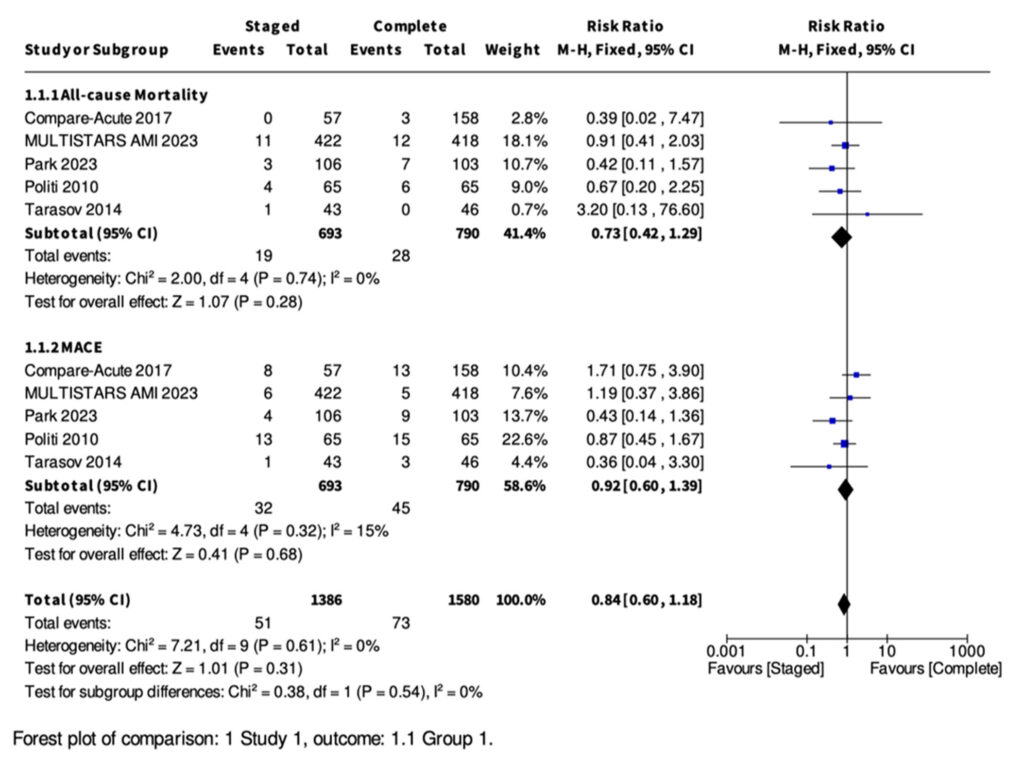
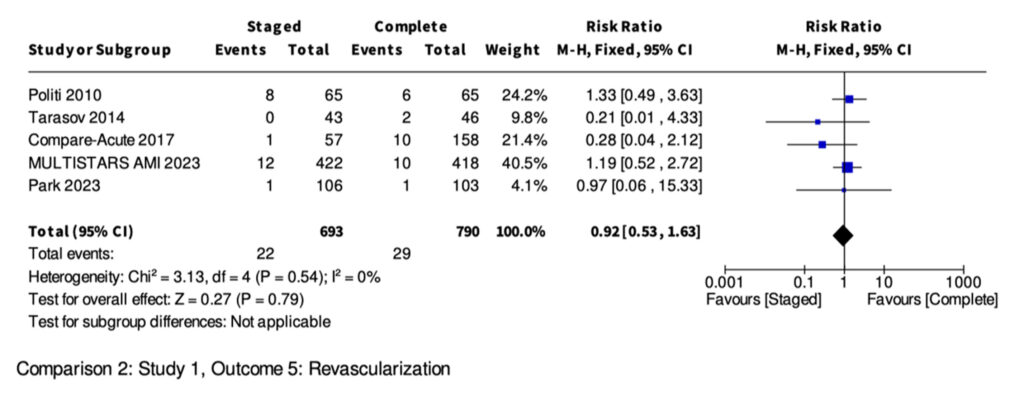
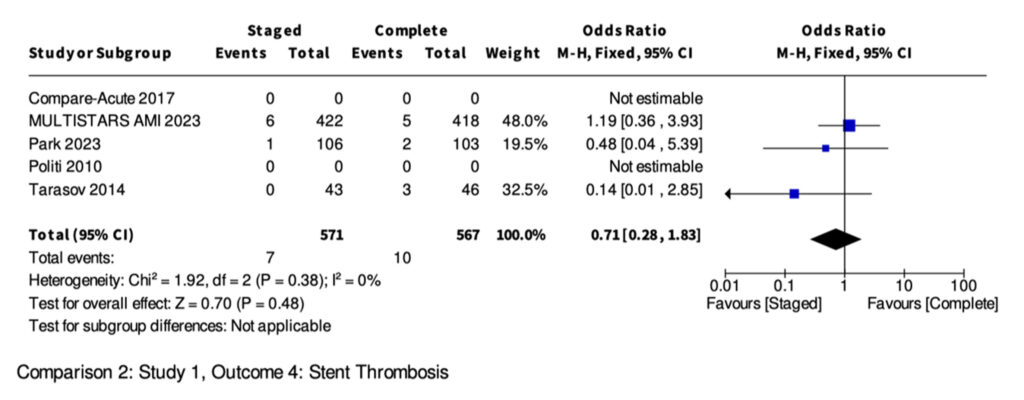
RESULTSFive studies were included in the meta-analysis with 1,483 subjects analyzed. There was a 27% lower risk of all-cause mortality (RR 0.73 [95% CI: 0.42-1.29]), 8% lower risk for MACE (RR 0.92 [95% CI: 0.60-1.39]) and in target vessel revascularization (RR 0.92 [95% CI: 0.53-1.63]), and a 29% decreased risk for stent thrombosis of staged revascularization versus immediate complete revascularization (RR 0.71 [95% CI: 0.28-1.83])
CONCLUSIONStaged and immediate complete vessel revascularization are the treatment strategies recommended for hemodynamically stable STEMI patients. The meta-analysis showed better clinical outcomes in the staged vessel revascularization than in immediate complete revascularization in terms of all-cause mortality, MACE, target vessel revascularization, and stent thrombosis. This study suggests that staged vessel revascularization is a preferable type of revascularization in patients presenting with STEMI with multivessel CAD.
KeywordsSTEMI, Staged Revascularization, Complete Revascularization
INTRODUCTION
Acute coronary syndrome (ACS) is a spectrum of condition that includes clinical presentation of anginal chest pain with or without changes on 12-lead electrocardiogram (ECG) and with or without increase in cardiac troponin (cTn) levels.1 Patients presenting with suspected ACS may be classified as acute myocardial infarction (AMI) or unstable angina (UA). The diagnosis of AMI is based on cTn release and is made based on the fourth universal definition of myocardial infarction (MI).2 The spectrum of ACS encompasses ST-segment elevation myocardial infarction (STEMI), non ST segment elevation myocardial infarction (NSTEMI), and UA, these high-risk manifestations of coronary atherosclerosis are important in order to assess for invasive strategy involving cardiac catheterization and prompt revascularization of the viable myocardium at risk for necrosis.3 Of all the types of ACS, STEMI remains the highest burden and remains a major health burden in the United States with approximately 750,000 cases annually.4 Locally, the incidence of coronary artery disease among hospitalized Filipinos is 17.5% with an estimated mortality of STEMI of 8.2%.5, 6 Proper triage and high index of suspicion is vital in early recognition of this cardiac emergency.7
Percutaneous coronary intervention (PCI) is the preferred modality for coronary reperfusion. Patients with a working diagnosis of STEMI should be triage for immediate reperfusion therapy within 120 minutes of the ECG-based diagnosis.1 However, these patients may also have multivessel coronary artery disease (CAD) on coronary angiography, which is associated with a higher risk of mortality.8 The 2021 American College of Cardiology (ACC)/American Heart Association (AHA) and Society for Cardiovascular Angiography and Interventions (SCAI) Guideline for Coronary Artery Revascularization recommends staged PCI in hemodynamically stable patients with STEMI and multivessel disease after successful primary PCI [Class of Recommendation (COR) 1; Level of Evidence (LOE) A]. In addition, there is weak recommendation (COR 2bl LOE B-R) regarding PCI of a non-infarct artery stenosis at the time of primary PCI to reduce cardiac event rates in selected hemodynamically stable patients with STEMI and low-complexity multivessel disease.9 A recent pairwise and network meta analysis by Cui et al. (2022) also stated that both immediate and staged complete revascularization were associated with a reduction of cardiovascular death or MI compared with culprit only PCI.10 Recently, the European Society of Cardiology (ESC) updated the Guidelines for the management of acute coronary syndromes in 2023, wherein there is a strong recommendation (COR 1; LOE A) that complete revascularization is recommended during index PCI or staged revascularization within 45 days of STEMI.1 Controversies arose regarding which is a better treatment strategy, to perform immediate vessel revascularization or staged revascularization within the 45 day period. A new investigator-initiated trial supported the complete multivessel PCI. This is an open-label randomized controlled trial by Stahli et al. (2023), in the MULTISTARS AMI, which showed that on hemodynamically stable STEMI with multivessel CAD, immediate complete multivessel PCI was noninferior to staged multivessel PCI (RR 0.52 [95% CI, 0.38-0.72]) in terms of all-cause mortality, non-fatal MI, stroke, unplanned ischemia driven revascularization, or hospitalization for heart failure.11 However, there are some reports stating that the incidence of major adverse cardiovascular events (MACE) was higher in immediate complete multivessel PCI compared to culprit only revascularization.12 To date, several meta-analyses like Bainey et al.,13 and Li et al.14 have compared complete and staged PCI with culprit only revascularization, but there was no direct comparison of complete and staged PCI treatment strategies in a series of randomized controlled trials. In addition, the recommendations from both the AHA/ACC/SCAI and the ESC endorse both treatment strategies, advocating for both staged and immediate complete revascularization. However, neither set of guidelines explicitly asserts the superiority of one approach over the other. Therefore, the team decided to proceed with this meta-analysis.
Research Question
Among adult patients presenting with STEMI, how effective is staged vessel revascularization compared with complete vessel revascularization as the preferred invasive treatment strategy?
Objectives
The general objective of this meta-analysis was to determine the efficacy of staged vessel revascularization compared with that of complete vessel revascularization in STEMI in terms of composite endpoint outcomes of all-cause mortality and MACE. Clinical outcomes for the secondary endpoints included were target vessel revascularization and stent thrombosis.
MATERIALS AND METHODS
Information sources and search strategies for the identification of studies
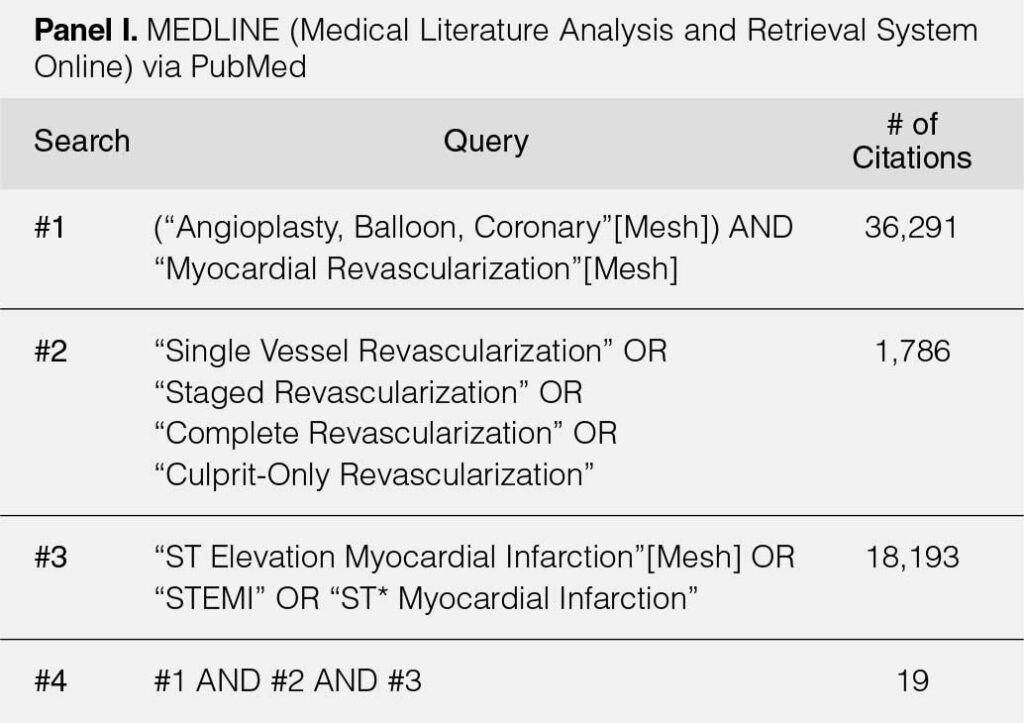
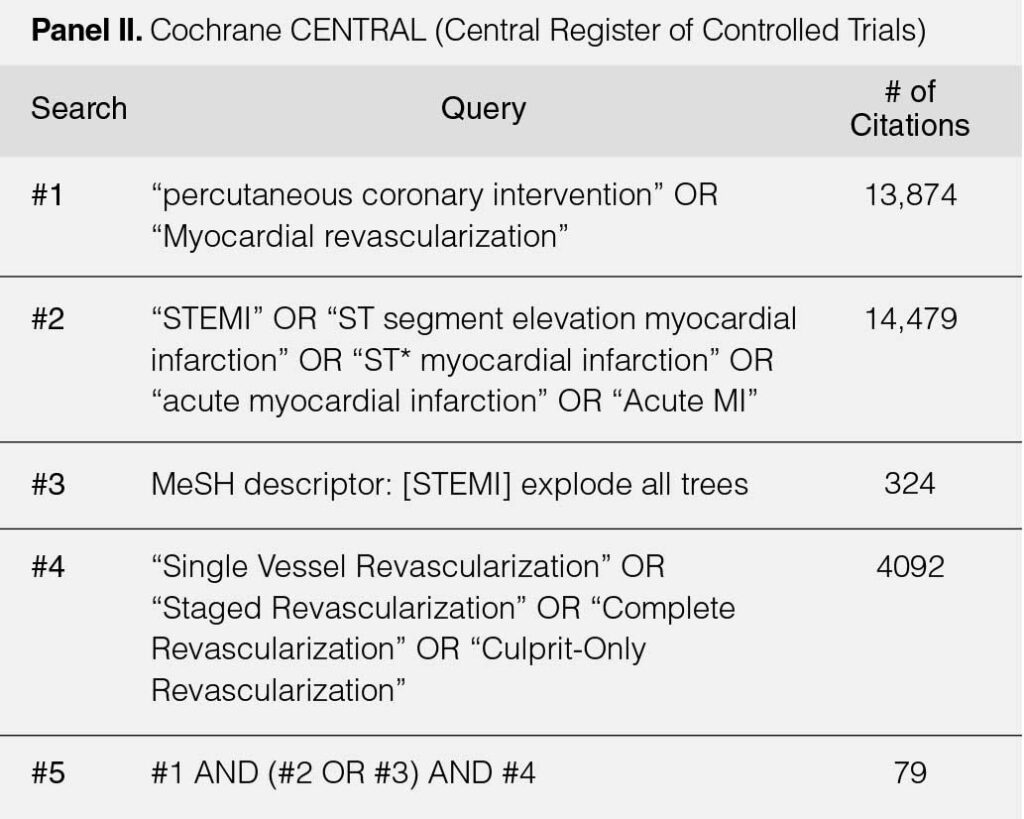
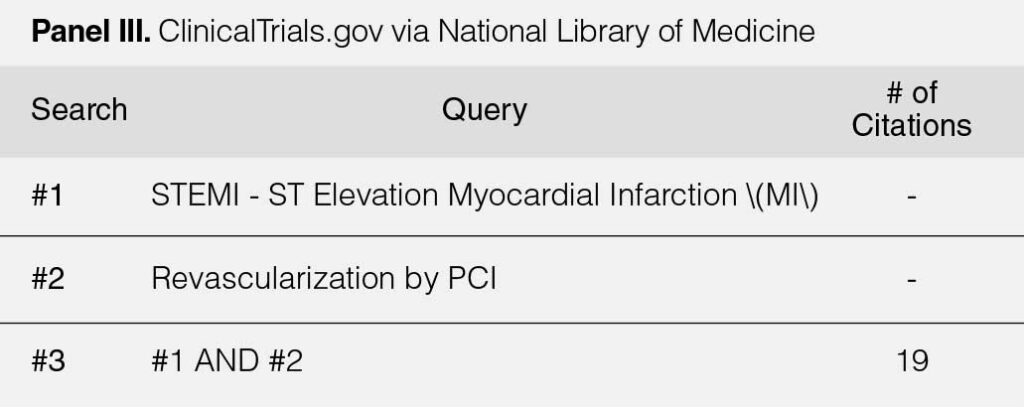
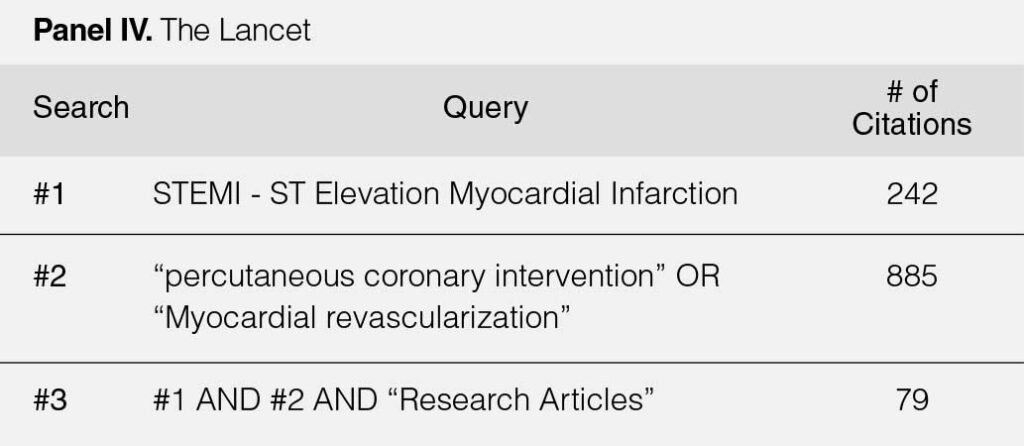
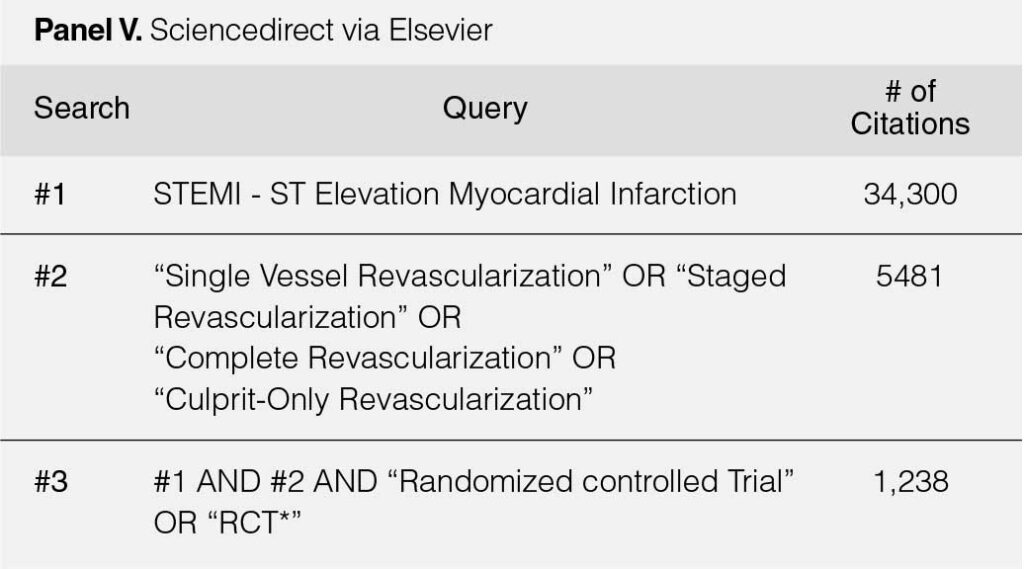
Two independent reviewers (BD and AV) conducted a systematic search and evaluation of studies on the efficacy of staged vessel revascularization versus complete vessel revascularization in STEMI patients from inception up to September 2024 using the following scientific search engines: PubMed, Cochrane Library, Lancet, and Clinical Trials. Local search engines were also included: Herdin Plus and Acta Medica Philippina. The authors also sought unpublished trials and ongoing studies in national and international trial registers, specifically ClinicalTrials.gov, International Standard Randomised Controlled Trial Number (ISRCTN) Register, European Union (EU) Clinical Trials Register, and World Health Organization (WHO) International Clinical Trials Registry Platform (ICTRP), dissertation and thesis databases, conference abstracts and other grey literature sources in the relevant search. The comprehensive search was not restricted by any language or publication date filter. This meta-analysis was performed following the PRISMA (Preferred Reporting Items for Systematic Reviews and Meta-analyses) 2020 statement.20 The search strategies used were “Percutaneous coronary intervention” OR “Staged Vessel Revascularization” OR “Complete Vessel Revascularization” AND ”STEMI”. Medical subject headings (MESH) term field search was added for “Percutaneous coronary intervention” and “Revascularization”. Search operators for truncation, wild card, and proximity searching were applied to each keyword to broaden the search. Please see Appendix A for a detailed search strategy.
Selection of studies
Two independent reviewers (BD and AV) independently performed a systematic process for selecting studies for inclusion in the review. All articles were uploaded in a systematic review application using “2022 Rayyan” where any duplicate records of the same report were removed. Abstracts and manuscript titles were examined to include only those that met the criteria for assessment. Studies were included if there was agreement among the two reviewers. During the study selection process, any discrepancies were resolved accordingly and consulted with a third expert investigator (RC).Data collection
The review authors have planned the relevant data to be collected in this meta-analysis and systematic review. A data collection form was created, including the citation details, study design, total study duration, type and number of participants, study location, study inclusion and exclusion criteria, baseline patient characteristics, description of the intervention and control, relevant outcome of interest, and results. This data collection form guaranteed some consistency in data abstraction and was deemed necessary for comparing data.
Information sources and search strategies for the identification of studies
Studies that compared staged versus complete vessel revascularization in STEMI patients were selected. Studies were included if 1) subjects with acute STEMI presented within 24 hours of symptom onset, 2) coronary anatomy suitable for complete percutaneous revascularization, 3) identifiable culprit lesion/artery, 4) coronary stenosis > 70% in at least two projections, 5) TIMI flow > 2 after revascularization of the culprit artery, 6) stable hemodynamic after revascularization of the culprit artery, and 7) subjects received dual antiplatelet therapy based on the guided treatment strategy. Studies that were excluded from the meta-analyses were unable to perform staged PCI after infarct related artery intervention, cardiogenic shock, unsustainability for PCI and the need for emergency CABG, and chronic total occlusion. Abstracts without full-text publication were also excluded from the selected studies. The study specifically looked into specific hemodynamically stable STEMI patients who underwent complete vessel revascularization and staged PCI on the same admission. There was no restriction on the language of reporting or the period. Published and unpublished randomized clinical trials were included, whether they were single-blinded, double-blinded, or unblinded. The authors strictly followed the inclusion criteria and follow up date to minimize heterogeneity.
Assessment of risk of bias in the included studies
Two independent reviewers (BD and AV) critically appraised each trial using the “Risk of Bias 2 Cochrane review manager tool” for the randomized controlled trial.21 The domains include bias arising from selection bias from randomization sequence and allocation concealment, performance bias from blinding the participants and personnel, detection bias from blinding of outcome, attrition bias from incomplete outcome data, and reporting bias from selective bias. The overall risk-of-bias was further subdivided into “low risk of bias,” “some concerns,” and “high risk of bias.”
Data synthesis and analysis
Data synthesis and analysis were performed using Revman 5.4. All P values were 2 sided and determined as statistically significant. The effect measure of choice for the outcome was reported as the risk ratio for dichotomous data at 95% intervals. The analyses were performed initially using a random effect analysis model using the Mantel-Haenszel statistical method.The I2 statistic was used to assess statistical heterogeneity across studies. An I2 value of 30-60% was considered moderate heterogeneity, 50-90% substantial heterogeneity, and 75-100% considerable heterogeneity. The analysis model was revised to a fixed effect analysis model if no evidence of heterogeneity was documented. Evidence of publication bias was evaluated using a funnel plot. If there is a presence of funnel plot asymmetry.
RESULTS
Study Selection
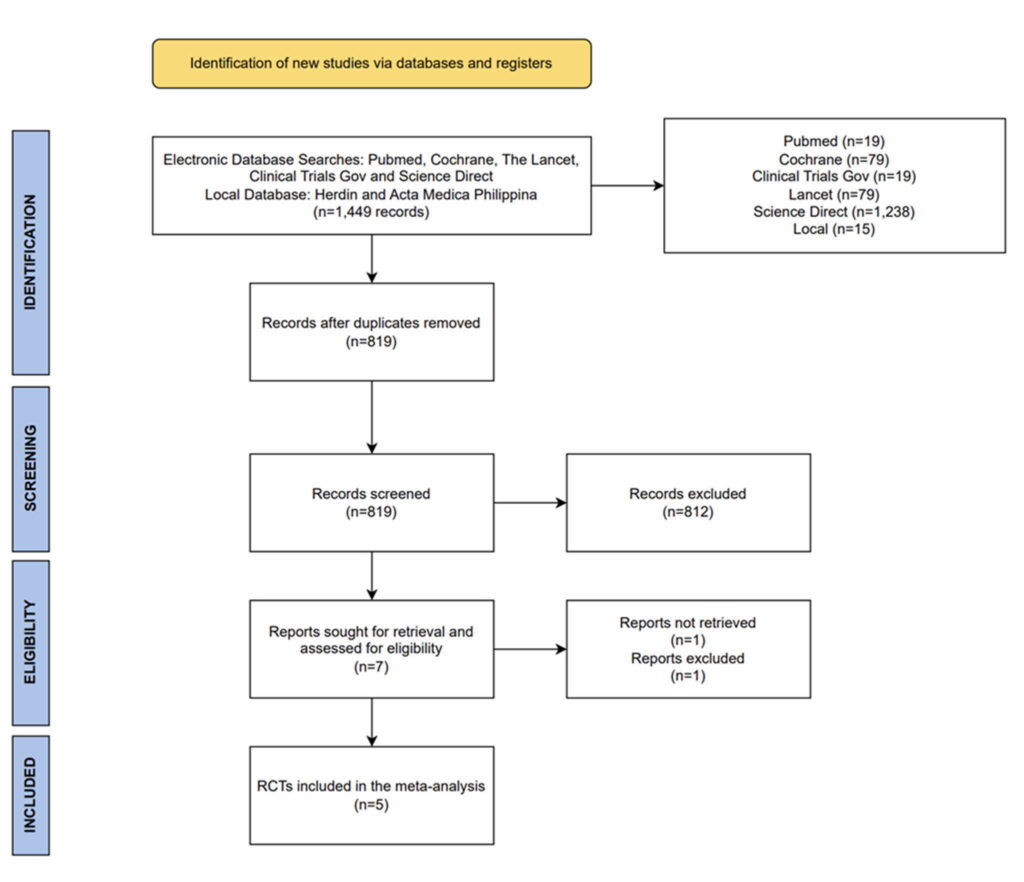
Of the 1,449 records identified in the database, 630 duplicates were removed, and 812 were excluded after screening the titles and abstracts. Seven articles were assessed for eligibility; however, one article was not retrieved since the trial is still ongoing and 1 was excluded because of eligibility criteria. Five articles were included in the meta-analyses (Figure 1). The studies were mainly designed to investigate staged and complete revascularization in terms of cardiovascular outcomes, specifically MACE and all-cause mortality. Risks for stent thrombosis and target vessel revascularization were also included. A PRISMA flow diagram was generated using the R package.15
Study Characteristics
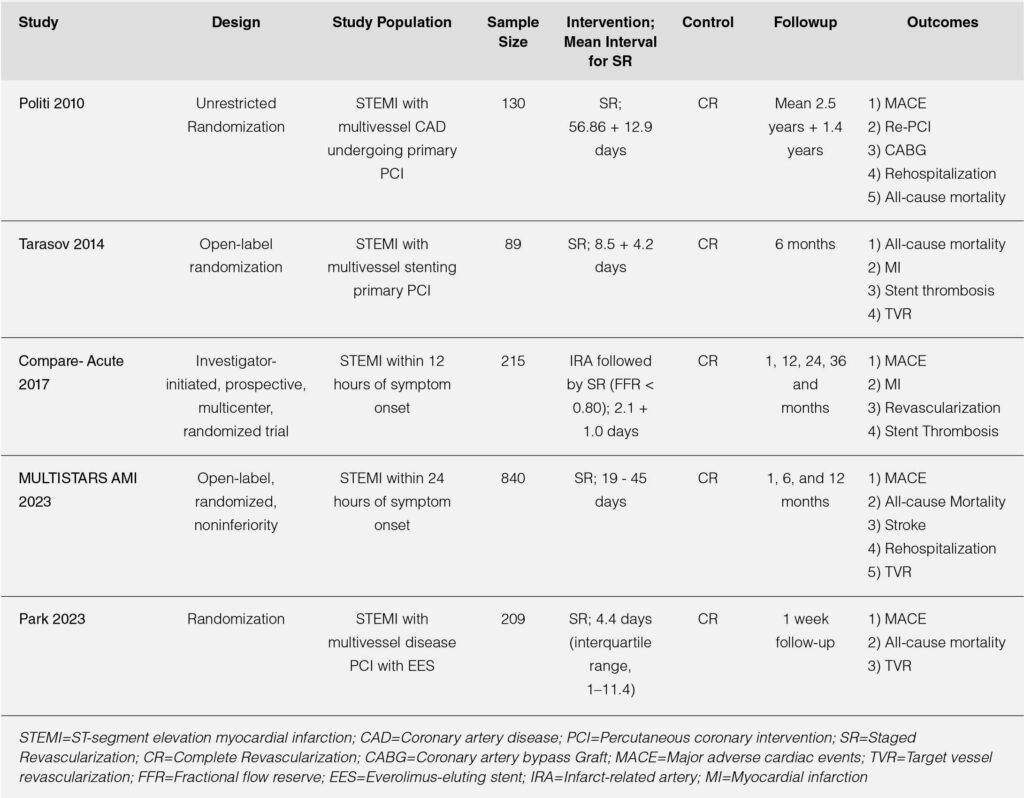
The five randomized controlled trials (RCTs) were included in the study with clinical trial names of Compare-Acute trial and MULTISTARS AMI by Smits and Stahli respectively.11, 16 RCTs by Park, Politi, and Tarasov were also included in the study (Table 1).17-19 A total of 1,483 participants included, with 693 in the staged revascularization group and 790 from the complete revascularization group. Several comorbidities were accounted for, and most patients had hypertension, diabetes, and chronic kidney disease. All study populations primarily had acute STEMI presenting within 12-24 hours of symptom onset, coronary anatomy suitable for complete percutaneous revascularization, and hemodynamically stable at the time of intervention.
Risk of Bias in the Included Studies
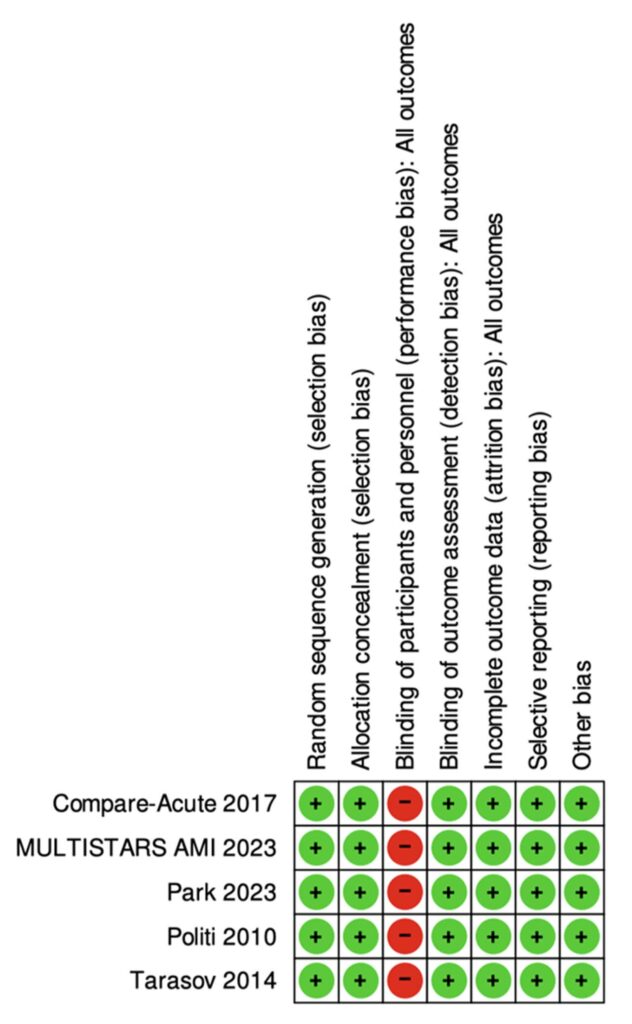
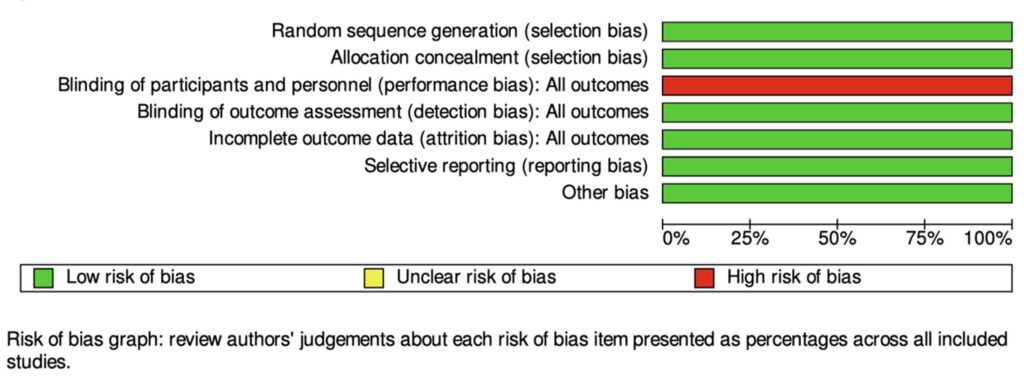
All trials were randomized, open-label, investigator-initiated trial. Patients were randomly assigned in a ratio of 1:2 and 1:1 using closed, opaque envelopes and interactive response technology. Because these were open-label trials, it is possible that there was a bias among patients and physicians toward subsequent target vessel revascularization among patients assigned to the control group. This poses a high risk of concern across all studies (Figure 2 and 3). However, the results of the study remains valid because the outcomes are based on objective hard endpoints rather than relying on subjective assessments from the outcome assessor. All of the trials had regular follow-up from as early as 1 week up to 3 years.
Outcomes of the meta-analysis
Five studies were included in the meta-analysis with 1,483 subjects analyzed. Each clinical outcome was assessed, wherein it showed 27% less risk of all-cause mortality (RR 0.73 [95% CI: 0.42-1.29]) and 8% less risk for MACE (RR 0.92 [95% CI: 0.60-1.39]) in staged revascularization compared with immediate complete revascularization. The composite endpoint outcome to determine the efficacy of the staged revascularization showed 16% risk reduction (RR 0.84 [95% CI: 0.60-1.18]). There was no heterogeneity observed in either group; hence, the fixed effect model of analysis was used across all statistical tests. (Figure 4)
The secondary outcomes that were analyzed showed that there was 8% reduction in target-vessel revascularization on staged revascularization versus complete revascularization (RR 0.92 [95% CI: 0.53-1.63]) and there was 29% decreased risk for stent thrombosis on staged revascularization versus complete revascularization (RR 0.71 [95% CI: 0.28-1.83]). (Figure 5 and 6)
Reporting Bias
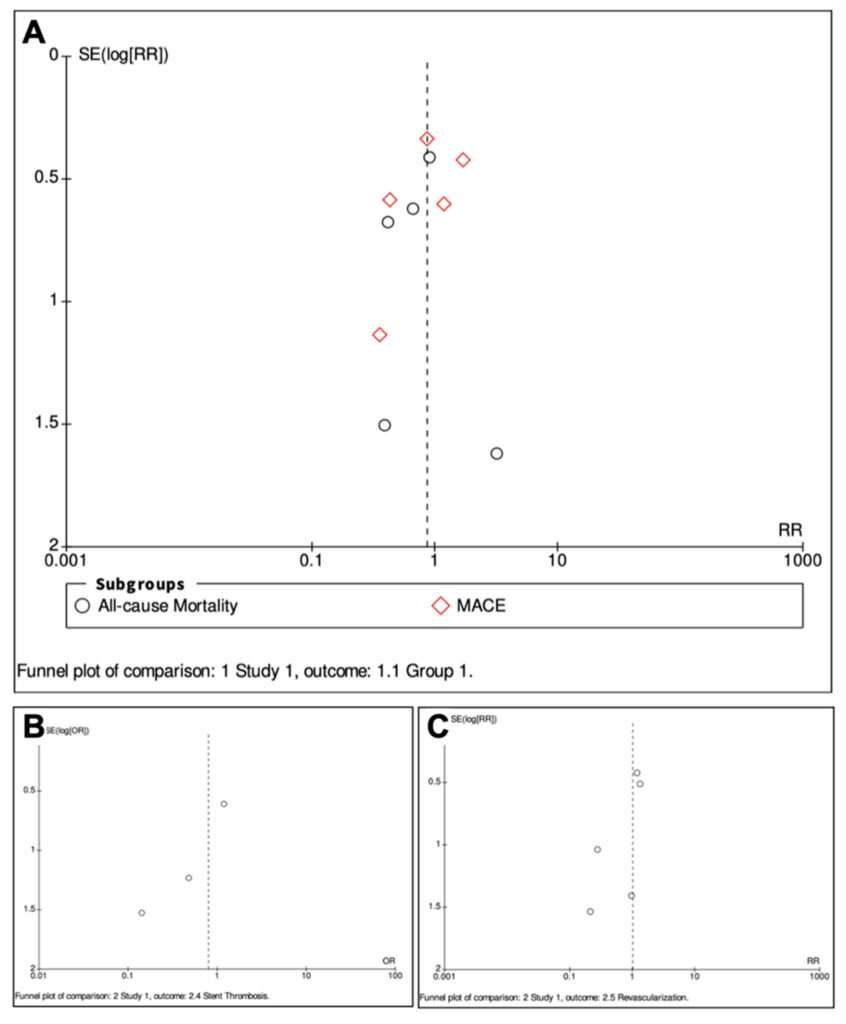
Based on visual inspection, there was symmetry in the funnel plot on 1) all-cause mortality, 2) MACE, 3) Stent thrombosis and 4) Revascularization. This suggests that there is no significant publication bias. (Figure 7).
DISCUSSION
Summary of Key Findings and Comparison with Literature
This meta-analysis evaluated five randomized controlled trials involving 1,483 patients with STEMI who underwent PCI (staged or immediate complete vessel revascularization). This study determined that there was a reduction in clinical outcomes on 1) all-cause mortality, 2) MACE, 3) target vessel revascularization, and 4) stent thrombosis in staged revascularization compared with immediate complete revascularization. The composite outcome for the hard endpoint event showed 16% risk reduction (RR 0.84 [95% CI: 0.60-1.18], I2 = 0%). There was a previous study by Ciu et al., demonstrated that the two treatment strategies (staged and complete revascularization) were associated with a reduction in MACE (RR=0.48) compared with culprit-only PCI.10 Since both 2021 ACC/AHA/SCAI and 2023 ESC guidelines on ACS recommend both immediate complete vessel revascularization and staged revascularization (performed with 45 days of STEMI) in hemodynamically stable STEMI patients with multiple vessel disease, but didn’t explicitly compared the two treatment strategy.1, 7 In our meta-analysis, it showed that staged vessel revascularization remains a better treatment strategy compared to immediate complete vessel revascularization. This was supported by the evidence of decreased rates of all-cause mortality (RR=0.73), MACE (RR=0.92), target vessel revascularization (RR=0.92) and stent thrombosis (RR=0.71).
Our findings should be interpreted in the context of the recent network meta-analysis by Elbadawi et al., which evaluated immediate versus staged complete revascularization among patients with STEMI and multivessel coronary artery disease. While both studies addressed similar clinical questions, important methodological differences may account for variations in their conclusions. Elbadawi et al. utilized a network meta-analysis framework that incorporated both direct and indirect comparisons across multiple revascularization strategies. In contrast, the present study was restricted to randomized controlled trials directly comparing staged and immediate complete revascularization, thereby minimizing reliance on indirect treatment estimates. Furthermore, our analysis focused exclusively on hemodynamically stable STEMI patients with coronary anatomy amenable to complete percutaneous revascularization, resulting in a more clinically homogeneous study population. Although both analyses support complete revascularization as an appropriate treatment strategy in patients with STEMI and multivessel disease, our findings provide a focused evaluation of the timing of complete revascularization. In this selected population, staged revascularization demonstrated a consistent numerical reduction in all-cause mortality, major adverse cardiovascular events, target vessel revascularization, and stent thrombosis compared with immediate complete revascularization. These findings complement the existing literature and suggest that the timing of complete revascularization may remain an important consideration in the management of hemodynamically stable STEMI patients with multivessel disease.22
Strengths and Limitations
This study presented a comprehensive systematic review and meta-analysis of patients with STEMI undergoing staged versus immediate complete vessel revascularization. A systematic critical appraisal of the included studies was performed using the updated Cochrane Risk of Bias 2.0 tool for RCTs. This paper provided a systematic and detailed analysis of the assessment of the available evidence. However, this study has its several limitations. First, the difference in the timing of staged revascularization across different studies might prevent the identification of optimal timing. Second, we cannot exclude the possibility that patients in the staged group might have been more likely to be referred for earlier ischemia-driven intervention when the coronary anatomy was known. Lastly, statistical results regarding the confidence interval showed that it passes the line of no effect in between groups that can decrease the strength of the study. This may be due to the small sample size of the included study and variability of the follow-up after the procedure.
Implications for practice and research
The overall certainty of the evidence and effect estimate must be considered in assisting physicians in the clinical decision making process in patient treatment. The cost-effectiveness of the procedure must also be taken into account.
Future research may require studies with improved methodological designs, appropriate statistical analyses, complete missing outcome data, and bias correction. Performing staged revascularization within 45 days of STEMI offers an additional reduction in the risk of MACE and thrombosis compared with immediate complete vessel revascularization. This could be a safer treatment option for both patients and physicians.
CONCLUSION
Staged and immediate complete vessel revascularization are the treatment strategies recommended for hemodynamically stable STEMI patients. The meta-analysis showed better clinical outcomes in the staged vessel revascularization than in immediate complete revascularization in terms of all cause mortality, MACE, target vessel revascularization, and stent thrombosis. This study suggests that staged vessel revascularization is a preferable type of revascularization in patients presenting with STEMI with multivessel CAD.
ACKNOWLEDGMENTS
None
SUPPLEMENTARY MATERIALS
The number of records retrieved from each database search was reported to enhance transparency and reproducibility of the search process. These citation counts were not used to determine study eligibility, study quality, or inclusion in the meta-analysis.
Appendix A. Detailed Search Strategy (These searches were conducted on September 30, 2024)
REFERENCES
1. Byrne RA, Rossello X, Coughlan JJ, et al. ESC Scientific Document Group. 2023 ESC Guidelines for the management of acute coronary syndromes. Eur Heart J. 2023 Oct 12;44(38):3720-3826. doi: 10.1093/eurheartj/ehad191. PMID: 37622654. CrossRef Pubmed
2. Thygesen K, Alpert JS, Jaffe AS, et al. Fourth universal definition of myocardial infarction (2018). Eur Heart J 2019;40:237–269. https://doi.org/10.1093/eurheartj/ehy462 CrossRef Pubmed
3. Kumar A, Cannon CP. Acute coronary syndromes: diagnosis and management, part I. Mayo Clin Proc. 2009 Oct;84(10):917-38. doi: 10.4065/84.10.917. PMID: 19797781; PMCID: PMC2755812. CrossRef Pubmed
4. Abe T, Olanipekun T, Adedinsewo D, et al. Trends and Outcomes of ST-Segment-Elevation Myocardial Infarction Among Young Women in the United States. J Am Heart Assoc. 2023 Mar 7;12(5):e026811. doi: 10.1161/JAHA.122.026811. Epub 2023 Feb 27. PMID: 36847058; PMCID: PMC10111456. CrossRef Pubmed
5. Toledano BR, Garganera KB , Prado JP, et al. Geographic Areas of Responsibility Among Percutaneous Coronary Intervention-capable Hospitals in the Philippines, Journal of Asian Pacific Society of Cardiology 2023;2:e26. CrossRef
6. Ramiro VR, Tiongson MDA, Taquiso JL, Abrahan IV LL, et al. Quality of Care of Adult Patients with ST-Elevation Myocardial Infarction (STEMI) at the Emergency Room of a Tertiary Hospital in the Philippines. Acta Med Philipp [Internet]. 2022 Apr.8 [cited 2024Jan.1];56(6). CrossRef
7. Gulati M, Levy PD, Mukherjee D, et al. 2021 AHA/ACC/ASE/CHEST/SAEM/SCCT/SCMR Guideline for the Evaluation and Diagnosis of Chest Pain: A Report of the American College of Cardiology/American Heart Association Joint Committee on Clinical Practice Guidelines. Circulation. 2021 Nov 30;144(22):e368-e454. doi: 10.1161/CIR.0000000000001029. Epub 2021 Oct 28. Erratum in: Circulation. 2021 Nov 30;144(22):e455. Erratum in: Circulation. 2023 Dec 12;148(24):e281. PMID: 34709879. CrossRef Pubmed
8. Puymirat E, Nakache A, Saint Etienne C, et al. Is coronary multivessel disease in acute myocardial infarction patients still associated with worse clinical outcomes at 1-year? Clin Cardiol. 2021 Mar;44(3):429-437. doi: 10.1002/clc.23567. Epub 2021 Feb 14. PMID: 33586188; PMCID: PMC7943894. CrossRef Pubmed
9. Lawton JS, Tamis-Holland JE, Bangalore S, et al. 2021 ACC/AHA/SCAI Guideline for Coronary Artery Revascularization: Executive Summary: A Report of the American College of Cardiology/American Heart Association Joint Committee on Clinical Practice Guidelines. Circulation. 2022 Jan 18;145(3):e4-e17. doi: 10.1161/CIR.0000000000001039. Epub 2021 Dec 9. Erratum in: Circulation. 2022 Mar 15;145(11):e771. PMID: 34882436. CrossRef Pubmed
10. Cui K, Yin D, Zhu C, et al. Optimal Revascularization Strategy for Patients With ST-segment Elevation Myocardial Infarction and Multivessel Disease: A Pairwise and Network Meta-Analysis. Front Cardiovasc Med. 2022 Jan 5;8:695822. doi: 10.3389/fcvm.2021.695822. PMID: 35071337; PMCID: PMC8767564. CrossRef Pubmed
11. Stähli BE, Varbella F, Linke A, et al. MULTISTARS AMI Investigators. Timing of Complete Revascularization with Multivessel PCI for Myocardial Infarction. N Engl J Med. 2023 Oct 12;389(15):1368-1379. doi: 10.1056/NEJMoa2307823. Epub 2023 Aug 27. PMID: 37634190. CrossRef Pubmed
12. Towashiraporn K. Current recommendations for revascularization of non-infarct-related artery in patients presenting with ST-segment elevation myocardial infarction and multivessel disease. Front Cardiovasc Med. 2022 Aug 11;9:969060. doi: 10.3389/fcvm.2022.969060. PMID: 36035910; PMCID: PMC9402999. CrossRef Pubmed
13. Bainey KR, Engstrøm T, Smits PC, et al. Complete vs Culprit-Lesion-Only Revascularization for ST-Segment Elevation Myocardial Infarction: A Systematic Review and Meta-analysis. JAMA Cardiol. 2020 Aug 1;5(8):881-888. doi: 10.1001/jamacardio.2020.1251. PMID: 32432651; PMCID: PMC7240651. CrossRef Pubmed
14. Li Z, Zhou Y, Xu Q, Chen X (2017) Staged versus One-Time Complete Revascularization with Percutaneous Coronary Intervention in STEMI Patients with Multivessel Disease: A Systematic Review and Meta-Analysis. PLOS ONE 12(1): e0169406. https://doi.org/10.1371/journal.pone.0169406 CrossRef Pubmed
15. Haddaway, N. R., Page, M. J., Pritchard, C. C., & McGuinness, L. A. (2022). PRISMA2020: An R package and Shiny app for producing PRISMA 2020-compliant flow diagrams, with interactivity for optimised digital transparency and Open Synthesis Campbell Systematic Reviews, 18, e1230. https://doi.org/10.1002/cl2.1230 CrossRef Pubmed
16. Smits PC, Laforgia PL, Abdel-Wahab M, et al. Fractional flow reserveguided multivessel angioplasty in myocardial infarction: three-year follow-up with cost benefit analysis of the Compare-Acute trial. EuroIntervention. 2020 Jun 25;16(3):225-232. doi: 10.4244/EIJ-D-20-00012. PMID: 32250250. CrossRef Pubmed
17. Park S, Rha SW, Choi BG, et al. Immediate versus staged complete revascularization in patients with ST-segment elevation myocardial infarction and multivessel coronary artery disease: results from a prematurely discontinued randomized multicenter trial. Am Heart J. 2023 May;259:58-67. doi: 10.1016/j.ahj.2023.01.020. Epub 2023 Feb 7. PMID: 36754106. CrossRef Pubmed
18. Politi L, Sgura F, Rossi R, et al. A randomised trial of target-vessel versus multi-vessel revascularisation in ST-elevation myocardial infarction: major adverse cardiac events during long-term follow-up. Heart. 2010 May;96(9):662-7. doi: 10.1136/hrt.2009.177162. Epub 2009 Sep 23. Erratum in: Heart. 2014 Feb;100(4):350. PMID: 19778920. CrossRef Pubmed
19. Tarasov RS, Ganyukov VI, Protopopov AV, et al. Results of a Randomized Study: Multivessel Stenting and Staged Revascularization in Patients With ST-Elevation Myocardial Infarction Using Second Generation Drug Covered Stents]. Kardiologiia. 2017 Mar;57(3):25-30. Russian. PMID: 28762932. Pubmed
20. Page MJ, McKenzie JE, Bossuyt PM, et al. The PRISMA 2020 statement: an updated guideline for reporting systematic reviews. BMJ. 2021;372:n71. CrossRef Pubmed
21. Sterne JAC, Savović J, Page MJ, et al. RoB 2: a revised tool for assessing risk of bias in randomized trials. BMJ. 2019;366:l4898. CrossRef Pubmed
22. Elbadawi A, et al. Immediate Versus Staged Complete Revascularization for Patients With ST-Segment Elevation Myocardial Infarction and Multivessel Disease: A Network Meta-Analysis of Randomized Trials. Journal of the American Heart Association. 2024;13:e035535. doi:10.1161/JAHA.124.035535. CrossRef Pubmed
Copyright Information