
Original Article
August 2026, 35:2
First online: 17 August 2026
Original Article
Head-Up Tilt Test in the Diagnosis of Vasovagal Syncope: A Cross-Sectional Study Evaluating Hemodynamic Profiles, Arrhythmic Patterns, and Predictive Factors
Doan Duc Dung, MD, PhD,1* Vu Quoc Oai, MD, MSc,1 Hoang Phu Quy, MD 1
Email: ducdung.doan@vinmec.com
Telephone: +84-354669398

ABSTRACT
INTRODUCTIONVasovagal syncope (VVS) is the most common cause of transient loss of consciousness, accounting for up to half of all syncope cases. The head-up tilt test (HUTT) remains a cornerstone diagnostic tool endorsed by international guidelines, yet hemodynamic profiles and arrhythmic subtypes in Southeast Asian populations remain incompletely characterized.
OBJECTIVESTo evaluate HUTT outcomes in a cross-sectional sample, characterize hemodynamic and arrhythmic response profiles, and identify independent predictors of test positivity at Vinmec Times City International Hospital.
METHODSWe enrolled 92 consecutive patients (mean age 43.2 ± 16.8 years; 58.7% female; range 14-81 years) undergoing HUTT between January 2022 and June 2024. Protocol comprised passive Phase 1 (70 degrees, 20 min), pharmacological Phase 2 (sublingual NTG 0.4 mg), and recovery Phase 3. Endpoints: SBP drop, HR change, arrhythmic events (asystole ≥ 3s, AV block, junctional rhythm), and syncope/presyncope. VASIS classification was applied.
RESULTSOut of 92 patients, 68 (73.9%) had a positive HUTT. Vasovagal syncope (VVS) was the predominant etiology (94.1%), while orthostatic hypotension (OH) was identified in 4.4%. Mean SBP at the syncopal event dropped significantly to 63.1 ± 19.2 mmHg. Notably, severe arrhythmic events occurred in 20.6% of positive cases, including asystole ≥ 3s (8.8%), junctional rhythm (7.4%), and high-degree AV block (4.4%). Patients testing positive during the passive Phase 1 (unprovoked) exhibited a 3.4-fold higher risk of cardioinhibitory responses compared to those in Phase 2 (aOR = 3.41; 95%CI: 1.08–10.77; p=0.037). Multivariate analysis identified younger age and the absence of hypertension as independent predictors of HUTT positivity.
CONCLUSIONHUTT demonstrates a high diagnostic yield across the 14–81 age spectrum. The significant prevalence of cardioinhibitory phenotypes (20.6%), particularly among passive-phase responders, identifies a high-risk subset requiring systematic risk stratification. These findings highlight the need for individualized risk assessment, with further studies warranted to clarify the role of pacemaker therapy in Southeast Asian patients presenting with malignant reflex syncope.
Keywordshead-up tilt test | vasovagal syncope | asystole | AV block | hemodynamics | Vinmec | Vietnam | Southeast Asia
1. INTRODUCTION
Syncope affects an estimated 15–39% of the general population over a lifetime; vasovagal syncope (VVS) is the leading etiology.1, 2 Recurrent episodes impose physical injury, impaired quality of life, and substantial healthcare costs.3 The HUTT is endorsed by ESC and ACC/AHA/HRS guidelines as a key diagnostic modality for unexplained syncope suspected to be reflex or orthostatic in origin,4 exploiting orthostatic stress to unmask pathological neuroautonomic reflexes.5 Arrhythmic subtypes — asystole, high-degree AV block, junctional escape — carry direct pacing-therapy implications6, 7 but remain underreported in Southeast Asia. This study from Vinmec Times City International Hospital presents the first cross-sectional characterization in a Vietnamese cohort spanning ages 14–81 years.
2. METHODS
2.1 Study Design and Setting
Descriptive cross-sectional study. Consecutive patients referred for HUTT at the Cardiology Department, Vinmec Times City International Hospital, January 2022 – June 2024 (Figure 1). Referral for HUTT was determined by the requesting physician based on clinical indication; the study authors did not select or screen patients prospectively, but enrolled and described, at a single time point, all consecutive patients who underwent the test during the study period.
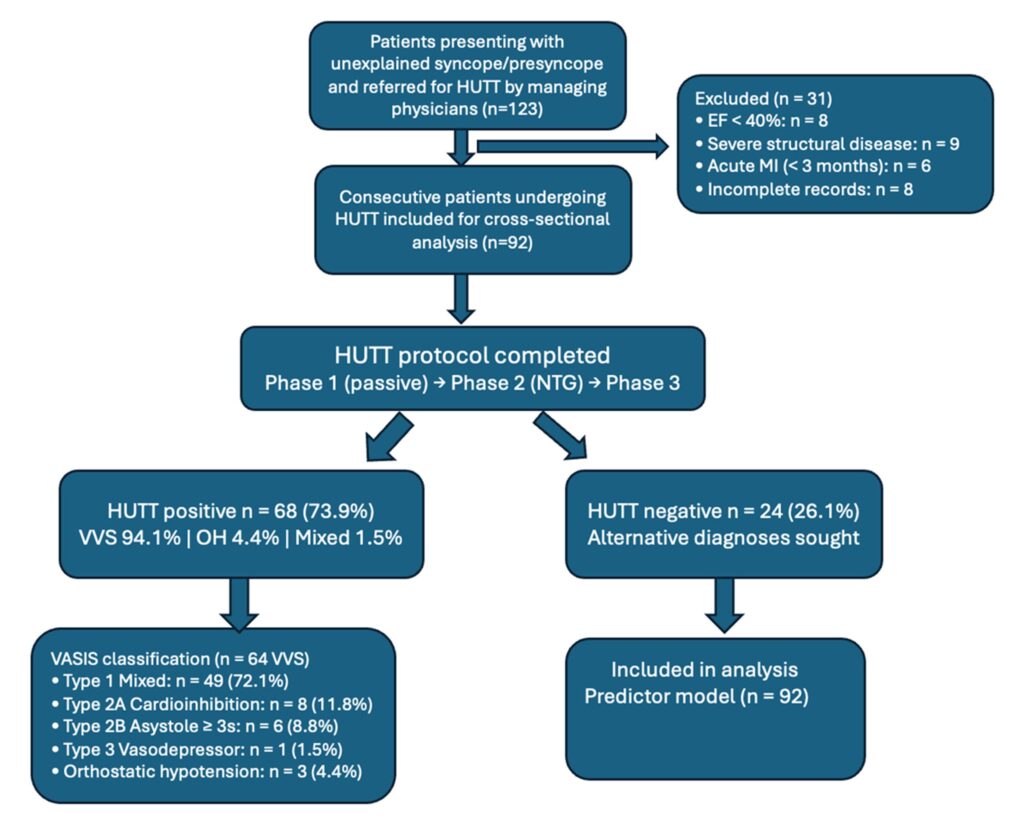
Inclusion: age ≥ 14 years; ≥ 1 unexplained syncope or orthostatic presyncope; non-diagnostic initial workup (ECG, 24h Holter, echocardiography), all of whom had already been referred for HUTT by their treating physician. Exclusion: EF <40%, severe structural disease, acute MI within 3 months. Ethics: Vinmec IRB Protocol Vinmec Times City number: 16/2026/ CN/HDDD, Declaration of Helsinki. Written informed consent from all participants; parental consent for minors.
2.2 HUTT Protocol
After 20-min supine rest, patients were tilted to 70 degrees for passive Phase 1 (20 min) with continuous beat-to-beat BP monitoring (Finapres, Ohmeda) and 12-lead ECG. If Phase 1 was negative, sublingual NTG 0.4 mg was administered (Phase 2, 20 min), followed by supine recovery (Phase 3). Positive test criteria were defined according to the 2018 ESC Guidelines for the diagnosis and management of syncope. VASIS classification was applied.2.3 Statistical Analysis
Continuous variables as mean ± SD or median (IQR); categorical as n (%). Between-group comparisons: Student’s t-test or Mann-Whitney U; chi-square or Fisher’s exact. Univariate and multivariate logistic regression for HUTT positivity predictors; results as OR (95%CI). Two-tailed p<0.05 significant. SPSS v27.0 (IBM, USA).
3. RESULTS
3.1 Baseline Characteristics
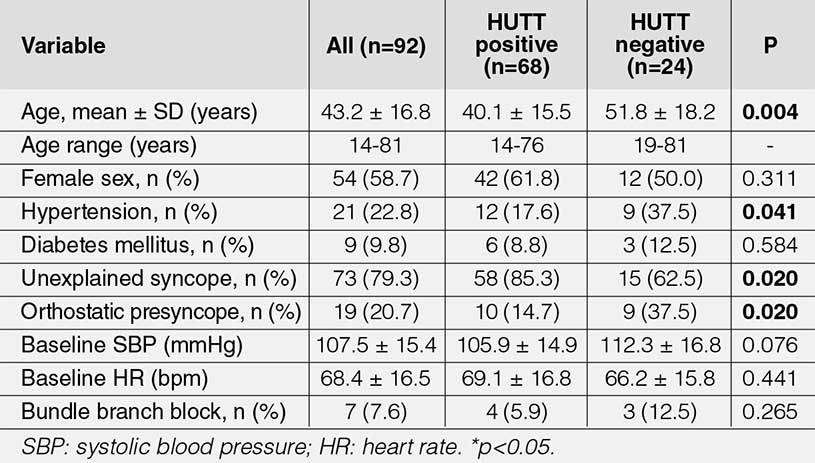
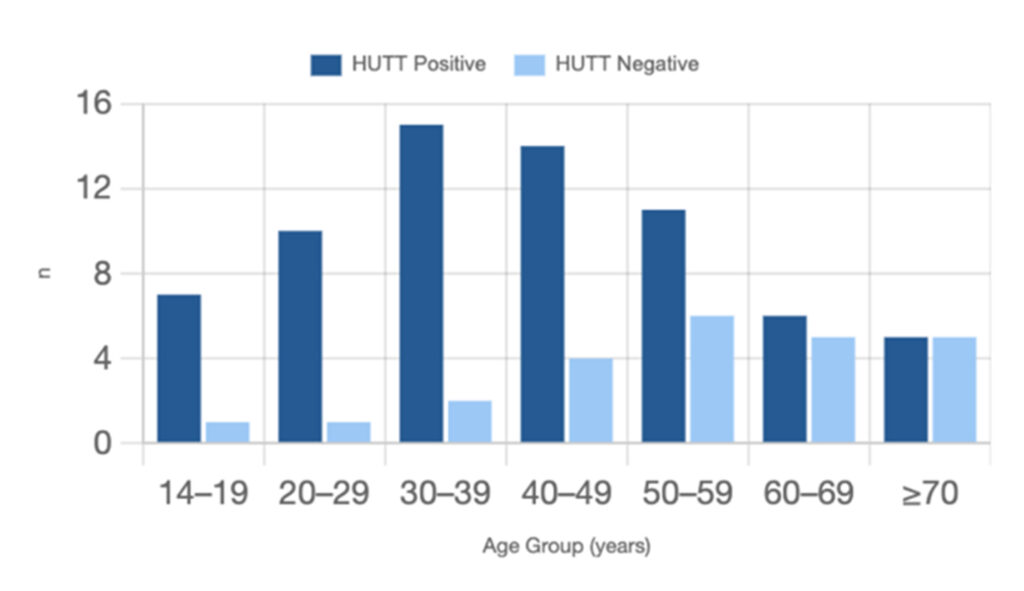
Our research contains 92 patients, included 68 cases (73.9%) that has positive HUTT and 24 cases (26.1%) are negative (Figure 2). Median overall age is 43.2 ± 16.8, HUTT (+) is significant younger than the HUTT (-) (40.1 vs 51.8, p = 0.004) (Figure 3). Female occupied the most (58.7%) but no significant stasistically between two groups (p = 0.311). Hypertension is appeared more than group of negatively HUTT (37.5% vs 17.6%, p = 0.041), meanwhile the rate of Diabetes type 2 is equal for two groups (p = 0.584). Unknown cause of syncope is the major indication, that occupied 79.3% all the sample, and more commonly meaning in the positive group (85.3% vs 62.5%, p = 0.020). In constrast, pre VVS occurred more than usual in negative group (37.5% vs 14.7%, p = 0.020). Systolic blood pressure and baseline heart rate is no significant statisticallly between two group (p = 0.076 và 0.441). Block His bundle is no difference (p = 0.265).
3.2 HUTT Outcomes and Hemodynamics
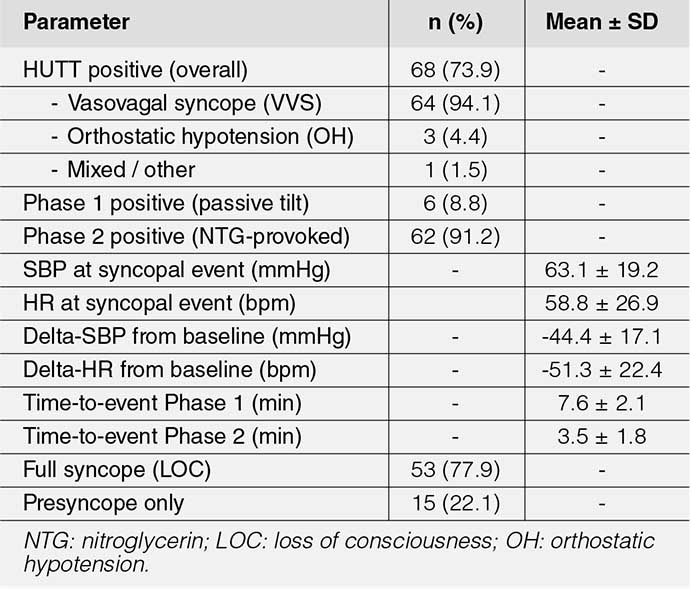
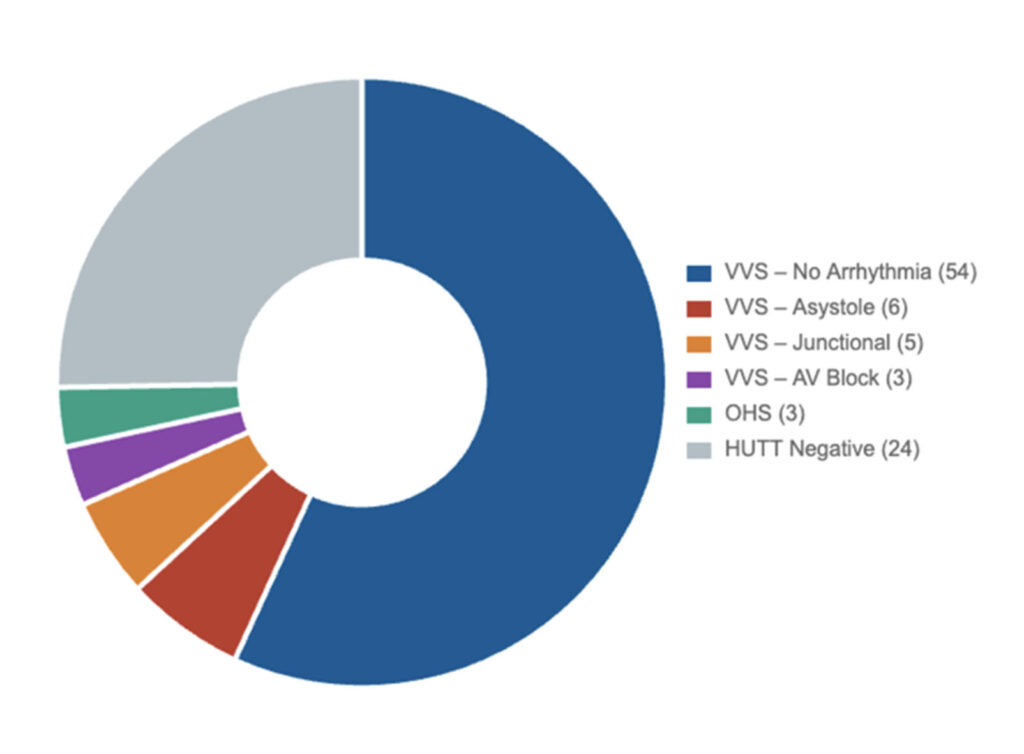
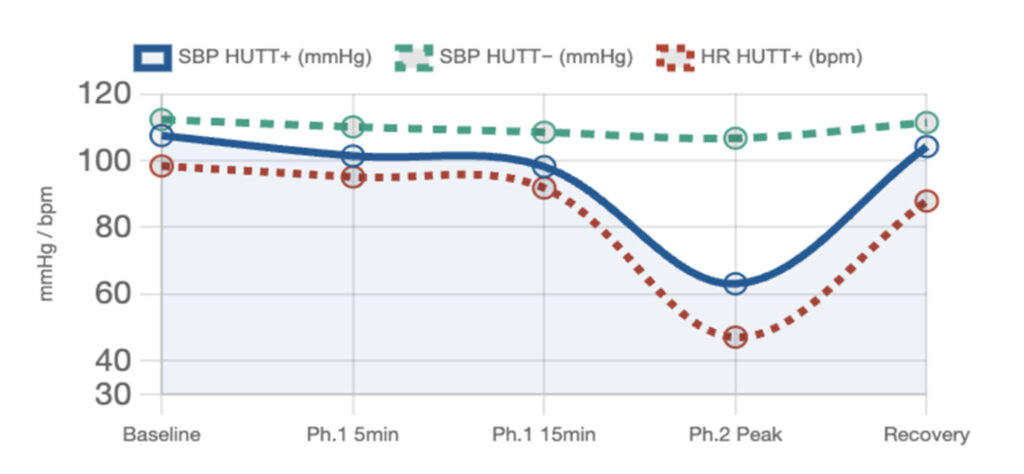
Among the 68 HUTT-positive patients (73.9% of the total cohort), vasovagal syncope was the predominant diagnosis, accounting for 94.1% of cases, while orthostatic hypotension and mixed/ other responses were rare (4.4% and 1.5%, respectively). The vast majority of positive responses occurred during Phase 2 with nitroglycerin provocation (91.2%), whereas only 8.8% were positive during the passive tilt phase. At the time of the syncopal event, mean SBP dropped to 63.1 ± 19.2 mmHg and mean HR to 58.8 ± 26.9 bpm (Figure 4), corresponding to substantial decreases from baseline (delta-SBP −44.4 ± 17.1 mmHg; delta-HR −51.3 ± 22.4 bpm). Time-to-event was notably shorter in Phase 2 (3.5 ± 1.8 min) compared to Phase 1 (7.6 ± 2.1 min), reflecting the pharmacological provocation effect of nitroglycerin. Full syncope with loss of consciousness occurred in 77.9% of positive cases, while the remaining 22.1% experienced presyncope only.
3.3 VASIS Classification
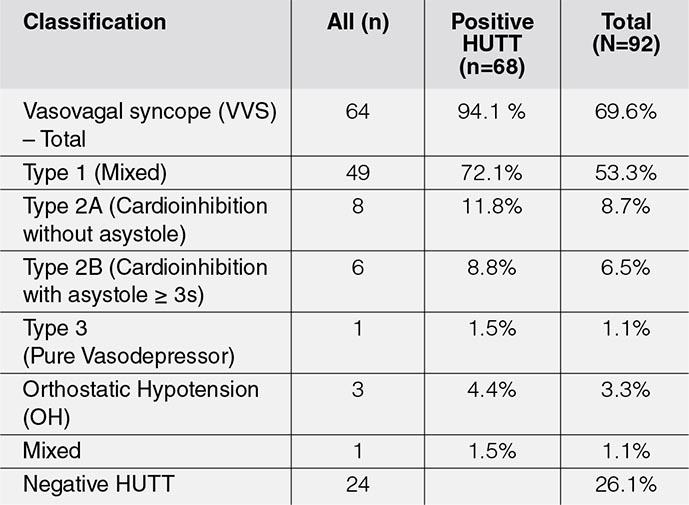
Within the VVS subgroup (n=64): Type 1 (Mixed) was the most common form with 49 patients (72.1% of VVS), characterized by a concomitant drop in both blood pressure and heart rate. Type 2 (Cardioinhibitory) accounted for a total of 20.6% of HUTTpositive cases. Specifically, Type 2B (asystole ≥ 3 seconds) was identified in 6 patients (8.8% of VVS). This group represents the highest clinical risk due to transient cardiac arrest, which may cause physical injury and often warrants consideration for permanent pacemaker implantation. Type 3 (Pure Vasodepressor) was rare (1.5% of VVS), indicating that isolated peripheral vasodilation without significant bradycardia was not the primary mechanism in this cohort.
3.4 Arrhythmic Events
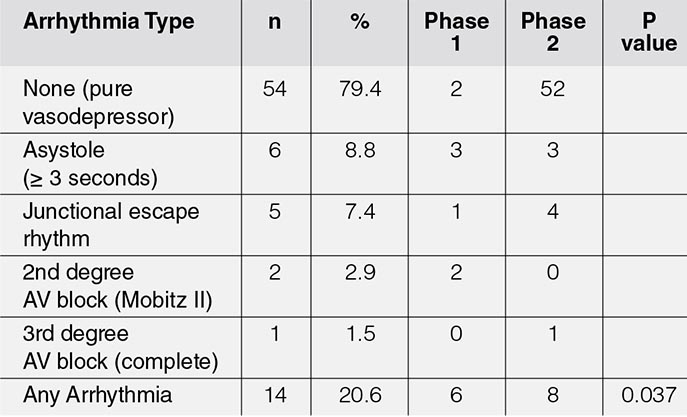
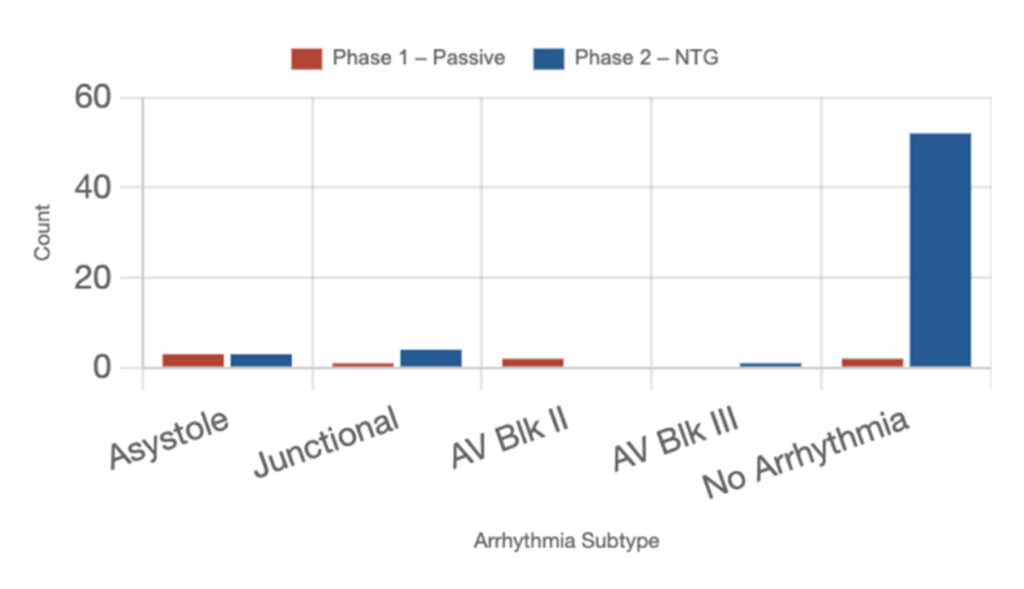
Key finding: Phase 1 passive positivity conferred a 3.4-fold higher risk of cardioinhibitory arrhythmia vs. Phase 2 (OR 3.41; 95%CI 1.08–10.77; p=0.037) (Figure 5). Among the 6 Phase 1-positive patients, 6 (75%) developed arrhythmic events including asystole ≥ 3s or high-degree AV block — independent of pharmacological provocation. Arrhythmias occurred significantly more frequently during Phase 1 passive tilt (75.0%) than during Phase 2 NTG-provoked tilt (13.3%), indicating that spontaneous vasovagal responses are more likely to involve a cardioinhibitory mechanism.
3.5 Predictors of Positive HUTT
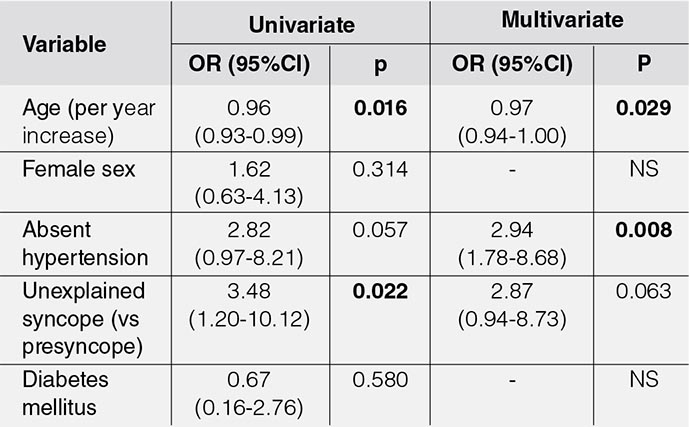
On univariate analysis, younger age (OR 0.96 per year, p = 0.016) and unexplained syncope as the indication (OR 3.48, p = 0.022) were significantly associated with a positive HUTT result. Absent hypertension showed a trend toward significance (OR 2.82, p = 0.057), while diabetes mellitus was not associated (p = 0.580).
After multivariate adjustment, two independent predictors of a positive HUTT remained significant: younger age (aOR 0.97 per year increase, 95%CI 0.94–1.00, p = 0.029) and absent hypertension (aOR 2.94, 95%CI 1.78–8.68, p = 0.008). Notably, absent hypertension became statistically significant in the multivariate model, suggesting a confounding effect masked in univariate analysis. Conversely, unexplained syncope lost its significance after adjustment (aOR 2.87, p = 0.063), indicating that its univariate association was partly confounded by other variables. Diabetes mellitus was excluded from the final model due to non-significance. These findings suggest that the typical profile of a patient likely to have a positive HUTT is a younger without hypertension.
4. DISCUSSION
This study at Vinmec Times City International Hospital provides a comprehensive characterization of hemodynamic responses during the Head-Up Tilt Test (HUTT) in a Vietnamese cohort. With an overall positivity rate of 73.9%, our findings reaffirm the diagnostic utility of HUTT in evaluating unexplained syncope and reveal clinically significant arrhythmic phenotypes that warrant further attention.
4.1. Positivity Rates and Population Characteristics
The 73.9% positivity rate observed in this study exceeds that of classic Western series, large meta-analyses report pooled positivity of ~34% passive, 53% with isoproterenol, and 62% with nitroglycerin in patients with suspected reflex syncope. Shortened “Fast Italian” nitroglycerin protocols achieve ~58–60% positivity, similar to traditional longer protocols.8, 9 , 10 Two factors may account for this discrepancy. The systematic use of sublingual nitroglycerin (Phase 2) likely optimized diagnostic sensitivity without substantially compromising specificity. Second, HUTT is not a routine investigation; it was performed selectively in patients already referred for evaluation of unexplained syncope or orthostatic presyncope. As the pretest probability of a reflex mechanism is inherently higher in this referred population than in the general population, a higher positivity rate than community-based estimates is expected and should not be interpreted as evidence of excessive test sensitivity.
Notably, VVS is not confined to younger age groups. Although multivariate analysis identified younger age as a significant predictor of positivity (aOR = 0.97 per year), the occurrence of asystole in both elderly patients and a 14-year-old adolescent underscores that reflex syncope remains a clinical entity spanning the entire age spectrum.
4.2. VASIS Classification and Clinical Significance of Cardioinhibition
The majority of our patients were classified as VASIS Type 1 (Mixed) (72.1%), characterized by a concomitant decline in blood pressure followed by progressive bradycardia culminating in syncope.
However, the most clinically relevant finding is the 20.6% prevalence of arrhythmic events. The Type 2B (asystole ≥3s) rate of 8.8% exceeds the average reported in many European cohorts.1, 2 This observation raises an important question: whether we are observing a population with inherently heightened parasympathetic tone, or whether the beat-to-beat resolution of the Finapres monitoring system provides superior detection of transient pauses. Irrespective of the underlying mechanism, the Type 2B subgroup represents the highest-risk category due to the potential for physical injury from sudden, unpredictable loss of consciousness.
4.3. Prognostic Value of the Passive Phase (Phase 1)
A clinically significant observation in this study is that patients who tested positive during the passive Phase 1 (unprovoked) exhibited a 3.4-fold higher risk of cardioinhibitory events compared to those responding only during pharmacologically provoked Phase 2.
This observation has important implications for clinical management. Patients who develop syncope within the first 20 minutes of passive tilting likely possess a hypersensitive autonomic nervous system predisposed to prolonged asystole. In light of evidence from the ISSUE-3 and BioSync-CLS trials,11 these individuals represent primary candidates for permanent cardiac pacing—particularly those over 40 years of age with recurrent episodes. We propose that a positive response during the passive phase should be considered a significant clinical indicator warranting expedited evaluation for pacing candidacy.
4.4. Predictors: Age, and Blood Pressure
Our multivariate model demonstrates that the absence of hypertension (aOR = 2.94) are independently associated with a positive HUTT. In normotensive subjects, greater vascular compliance may facilitate a more rapid vasodepressor response. Conversely, in hypertensive patients, increased arterial stiffness and attenuated baroreceptor sensitivity may confer relative protection against the acute hemodynamic collapse characteristic of VVS, while paradoxically increasing susceptibility to orthostatic hypotension (OH).
4.5. Limitations and Future Directions
Several limitations merit consideration. First, the cross-sectional design captures findings at the single time point of HUTT and does not permit assessment of clinical outcomes over time. Although this represents the first cross-sectional HUTT study at a major Vietnamese tertiary center, the sample size (N=92) limits generalizability to the broader national population. Additionally, the absence of long-term follow-up data via Implantable Loop Recorders (ILR) precludes definitive confirmation of the concordance between tilt-induced and spontaneous asystolic events in daily life.
Nevertheless, based on these results, we advocate for the systematic implementation of HUTT—not solely as a diagnostic tool, but as a means of arrhythmic risk stratification. This approach enables a truly individualized therapeutic strategy, ranging from physical counterpressure maneuvers and pharmacological interventions to the informed consideration of cardiac pacing.
5. CONCLUSION
This cross-sectional study of 92 patients at Vinmec Times City International Hospital demonstrates that the Head-Up Tilt Test (HUTT) yields a high positivity rate (73.9%) for unexplained syncope and orthostatic presyncope. Our findings support three principal conclusions.
Vasovagal Syncope (VVS) constitutes the predominant diagnosis (94.1%), with the mixed phenotype (VASIS Type 1) being most prevalent. However, the 20.6% incidence of severe cardioinhibitory events — including prolonged asystole and high degree AV block — identifies a high-risk subset prone to physical injury that mandates rigorous clinical surveillance.
Patients testing positive during the unprovoked passive phase carry a 3.4-fold higher risk of cardioinhibitory responses compared to pharmacological responders. Passive-phase positivity should be recognized as a critical prognostic marker, potentially warranting expedited evaluation for permanent pacing in accordance with ISSUE-3 and BioSync-CLS trial criteria.
Younger age, and the absence of hypertension serve as independent clinical predictors of HUTT positivity, reflecting heightened autonomic reactivity in these populations.
DECLARATIONS
Funding: No external funding. Conducted as part of routine clinical care at Vinmec Times City International Hospital.
Conflicts of interest: All authors declare no conflicts of interest.
Ethics: Vinmec Times City Hospital IRB. Declaration of Helsinki. Written informed consent obtained.
Data availability: De-identified data available on request: ducdung.doan@vinmec.com. Author contributions (CRediT): Doan Duc Dung: Conceptualization, Methodology, Formal analysis, Supervision, Writing – original draft. Vu Quoc Oai: Data collection, Validation, Writing – review & editing. Hoang Phu Quy: Investigation, Data collection, Writing – review & editing. All authors approved the final manuscript.REFERENCES
1. Ganzeboom KS, Mairuhu G, Reitsma JB, Linzer M, Wieling W, Van Dijk N. Lifetime cumulative incidence of syncope in the general population: a study of 549 Dutch subjects aged 35–60 years. J Cardiovasc Electrophysiol 2006;17:1172–6. CrossRef Pubmed
2. Brignole M, Moya A, de Lange FJ, Deharo JC, Elliott PM, Fanciulli A, Fedorowski A, Furlan R, Kenny RA, Martín A, Probst V, Reed MJ, Rice CP, Sutton R, Ungar A, van Dijk JG; ESC Scientific Document Group. 2018 ESC Guidelines for the diagnosis and management of syncope. Eur Heart J. 2018;39(21):1883–1948. doi:10.1093/eurheartj/ehy037. PMID: 29562304. CrossRef Pubmed
3. Salari, N., Karimi, Z., Hemmati, M., Mohammadi, A., Shohaimi, S., & Mohammadi, M. (2024). Global prevalence of vasovagal syncope: A systematic review and meta-analysis. Global epidemiology, 7, 100136. https://doi.org/10.1016/j.gloepi.2024.100136 CrossRef Pubmed
4. Kenny RA, Ingram A, Bayliss J, Sutton R. Head-up tilt: a useful test for investigating unexplained syncope. Lancet. 1986;1(8494):1352–1355. doi:10.1016/S0140-6736(86)91665-X. PMID: 2872472. CrossRef Pubmed
5. Samoil D, Grubb BP. Head-upright tilt table testing for recurrent, unexplained syncope. Clin Cardiol. 1993;16(11):763-766. doi:10.1002/clc.4960161104 CrossRef Pubmed
6. Brignole M, Menozzi C, Moya A, et al. Pacemaker therapy in patients with neurally mediated syncope and documented asystole: Third International Study on Syncope of Uncertain Etiology (ISSUE-3): a randomized trial. Circulation. 2012;125(21):2566-2571. doi:10.1161/CIRCULATIONAHA.111.082313 CrossRef Pubmed
7. SHINOHARA, T., EBATA, Y., AYABE, R., FUKUI, A., OKADA, N., YUFU, K., NAKAGAWA, M. and TAKAHASHI, N. (2014), Cardiac Autonomic Dysfunction in Patients with Head-up Tilt Test-Induced Vasovagal Syncope. Pacing and Clinical Electrophysiology, 37: 1694-1701. https://doi. org/10.1111/pace.12484 CrossRef Pubmed
8. Guida, P., Troisi, F., Di Monaco, A., Romanazzi, G., Iacoviello, M., & Grimaldi, M. (2025). Head-up tilt testing in patients with suspected vasovagal syncope: A meta-regression modelling. International journal of cardiology, 133908 . https://doi.org/10.1016/j.ijcard.2025.133908. CrossRef Pubmed
9. Forleo, C., Guida, P., Iacoviello, M., Resta, M., Monitillo, F., Sorrentino, S., & Favale, S. (2013). Head-up tilt testing for diagnosing vasovagal syncope: a meta-analysis. International journal of cardiology, 168 1, 27-35 . https://doi.org/10.1016/j.ijcard.2012.09.023. CrossRef Pubmed
10. Kalhor, P., Ghahari, P., Asgari, N., Jalali, A., & Sadeghian, S. (2025). A Tick of the Clock: Finding the Sweet Spot in Tilt Table Test. The Effectiveness of Short-Duration Head-Up Tilt Test as a Diagnostic Tool in Suspected Vasovagal Patients: A Retrospective Observational Study in a Tertiary Syncope Unit. Journal of Arrhythmia, 41. https://doi.org/10.1002/joa3.70190. CrossRef Pubmed
11. Michele Brignole, Vincenzo Russo, Francesco Arabia, Mario Oliveira, Alonso Pedrote, Arnaud Aerts, Antonio Rapacciuolo, Serge Boveda, Jean Claude Deharo, Giampiero Maglia, Gerardo Nigro, Daniele Giacopelli, Alessio Gargaro, Marco Tomaino, for the BioSync CLS trial Investigators, Cardiac pacing in severe recurrent reflex syncope and tilt-induced asystole, European Heart Journal, Volume 42, Issue 5, 1 February 2021, Pages 508–516, https://doi.org/10.1093/eurheartj/ehaa936. CrossRef Pubmed
Copyright Information