
Original Article
August 2026, 35:2
First online:September 2026
Original Article
Association of Heart Failure Categorized by Ejection Fraction with In-Hospital and Cardiovascular Mortality among Patients with Acute Decompensated Heart Failure
Liberty Odon Yaneza, MD, FPCP, FPCC , MSc,1 Felix Eduardo R. Punzalan, MD, FPCC, FPCC, MSc,2 Cynthia P. Cordero, MScPH, MMedStat,3 Marissa M. Alejandria, MD, FPCP, FPSMID, MSc,3 Eugene B. Reyes, MD, FPCC, FPCC,2 Alisa P. Bernan, MD, FPCC, FPCC, MSc4
2 University of the Philippines-Philippine General Hospital
3 University of the Philippines-Department of Clinical Epidemiology
4 Davao Doctors Hospital
Main author and contact information: Liberty Odon Yaneza, +639178572978; loyaneza@up.edu.ph

ABSTRACT
INTRODUCTIONEjection fraction (EF) is a powerful prognosticator for heart failure (HF). Acute heart failure (AHF) may either be new onset or acute decompensated heart failure (ADHF). Studies were inconsistent on the association of HF categorized by EF with mortality among AHF patients particularly ADHF.
METHODS
A retrospective cohort study of ADHF patients enrolled in the national Philippine Heart Association AHF registry was conducted. Patients with de novo HF were excluded. Binary logistic regression analysis was done.
RESULTS
From 1123 patients with AHF, 460 patients (41%) were diagnosed with ADHF. Heart failure reduced EF (HFrEF) was the most common classification (50%), followed by heart failure preserved EF (HFpEF 31%), and heart failure mildly reduced EF (HFmrEF 18%). The mean age was 56 years. Majority has no identifiable precipitating factors for decompensation. In-hospital mortality occurred in 11 patients (2.72%) with cardiovascular mortality as the major cause of death.
On adjusted analysis, the odds of dying for HFrEF and HFmrEF was 7x (OR adj= 6.7; 95% CI 0.65-64.35) and 3x (OR adj=3.29 95% CI 0.15- 70.60) respectively compared to the odds of dying in HFpEF. However, this result was not statistically significant.
CONCLUSION
Although there was a trend for higher odds of dying for HFrEF and HFmrEF as compared to HFpEF, but the study did not show statistical significance.
Keywords
Acute Decompensated Heart Failure, De Novo Heart Failure, Heart Failure Reduced Ejection Fraction, Heart Failure Mildly Reduced Ejection Fraction, Heart Failure Preserved Ejection Fraction.
INTRODUCTION
Globally, approximately 64.3 million population is afflicted with heart failure (HF).1 The estimated worldwide prevalence rate is 0.5-2% while the prevalence rate of HF in Southeast Asian countries is at 4.5-6.7%.2, 3 In the Philippines, the prevalence rate was 1.6% based from Philippine Health Insurance Corporation (PhilHealth) claims.4
One of the current recommended classification of HF is by using echocardiography derived ejection fraction (EF) namely, heart failure reduced EF (EF≤40%); heart failure mildly reduced EF (EF between 41%-49%) ; and heart failure preserved EF (EF ≤50%).5
HF can manifest as gradual worsening of signs and symptoms or acutely requiring need for urgent medical attention/therapy or an unplanned emergency room visit.6, 7
Acute heart failure (AHF) can be classified as de novo and acute decompensated HF (ADHF) depending on the absence and presence of history of heart failure respectively.8
There were inconsistencies with data results regarding the association of heart failure categorized by EF in AHF particularly ADHF. Majority of studies either combined de novo and ADHF or combined chronic and AHF in the analysis.9-16 One study did an association of different EF categories but outcomes was determined 1 year after discharge and not during hospital admission.17
METHODS
Study Design: Retrospective Cohort Study
Study Setting: Tertiary hospitals with cardiology training program who participated in the national Philippine Heart Association heart failure registry (PHA-HFR)
Population:
Patients with acute decompensated heart failure (ADHF) were enrolled from January 2015 up to December 2018. Only ADHF population was included in the study. The rationale was to achieve a more homogeneous study population making the baseline characteristics more consistent and the results easier to interpret. Additionally, a homogeneous populations would reduce confounding from different etiologies of de novo and ADHF.
The following are the inclusion and exclusion criteria of this study.
Inclusion Criteria:
- Patients who were older than 19 years old
- Patients who were in acute decompensated state
- Patients with past history of heart failure symptoms or with structural heart abnormalities
- Patients with signed consent form
Exclusion Criteria:
- Patients who were diagnosed with de novo heart failure
Data Collection Procedure:
Approval from PHA Research Committee was secured to utilize the anonymized stored data collection forms and excel data of PHA-HFR. The principal investigator (PI) manually reviewed both the registry collection forms and its anonymized excel data file. Data abstraction was then done. Each patient was given ID code assignment. The data that was recorded in the excel format were used for analysis.
Description of the Data Source: Philippine Heart Association-Heart Failure Registry (PHA-HF REGISTRY).
PHA-HFR commenced on January 2015 with inclusion criteria of adult more than 19 years old with diagnosis of AHF admitted in participating hospitals.
Eight (8) hospitals participated in the registry that has its own principal investigators (PI) consisted of 2-3 practicing cardiology consultants and assisted by research assistants (RA). The registry should have approval of each hospital’s Institutional Review Board before its initiation. The PIs validated the diagnosis of HF using the Framingham criteria in an independent manner.
Personal information of the patient were only known to PI, RA, and the central statistician. To ensure confidentiality, all members of the research team including research members of each institution and central research committee signed a confidentiality agreement.
Sample Size Determination:
The research protocol’s primary objective was association of heart failure categorized by EF on all cause death in the hospital among acute decompensated heart failure (ADHF) patients. Based on the study of Choi et al14 the odds ratio for death on patients with HFrEF as compared with HFpEF in ADHF was 1.62 (95% confidence interval of 1.05-2.60). To detect an odds ratio of 1.6 at 5% level of significance and 80% power, 1712 patients per group are required. However, if we assumed 10% mortality rate for exposed group (OR of 2.8) at 5% level of significance and 80% power, 272 patients per group are required.
In this study, all patients enrolled in the PHA HFR with diagnosis of ADHF that numbered to 460 were included. The main analysis used 405 cases since 48 patients did not have information on both EF and outcome and 7 patients did not have information on mortality alone.
Data Management and Analysis:
Descriptive statistics was used to summarize the demographic, clinical characteristics, biochemistries and laboratory profile, treatment strategies, and outcomes. Frequency and proportion were used for categorical variables, median and inter quartile range for non-normally distributed continuous variables, and
mean and SD for normally distributed continuous variables.
Binary logistic regression was used to estimate the crude and adjusted odds ratio of HFrEF and HFmrEF compared to HFpEF for in hospital mortality. A separate logistic regression for cardiovascular mortality was not done due to the small number of events (8 deaths). Adjustments were done according to demographic characteristics and the clinical variables that showed statistically significant results in the crude analysis. Subsequently, clinical variables that were deemed clinically important though not statistically significant in the crude analysis were added into the model. The remaining potential confounders were not included in the model to avoid overfitting.
All estimates were generated at 95% confidence level. All statistical tests were done at 5% level of significance, two-tailed. Missing values were neither replaced nor imputed. STATA 13.1 was used.
RESULTS
A total of 1123 acute heart failure patients were enrolled in the Philippine Heart Association Heart Failure Registry (PHA-HFR) from January 2015 to December 2018. Of these patients, 460 (41%) were diagnosed with acute decompensated heart failure (ADHF).
As shown in Table 1, the mean EF was 42.44%. HFrEF was the most common classification of HF occurring at 50%, followed by HFpEF (31%), and lastly by HFmrEF (18%). The mean age was 56 years. Less than 60 year old patients prevailed in all EF categories with highest frequency (64%) for the HFrEF group. Male sex predominance was mostly seen in HFrEF (65%) whereas female predominance was noted for HFpEF.
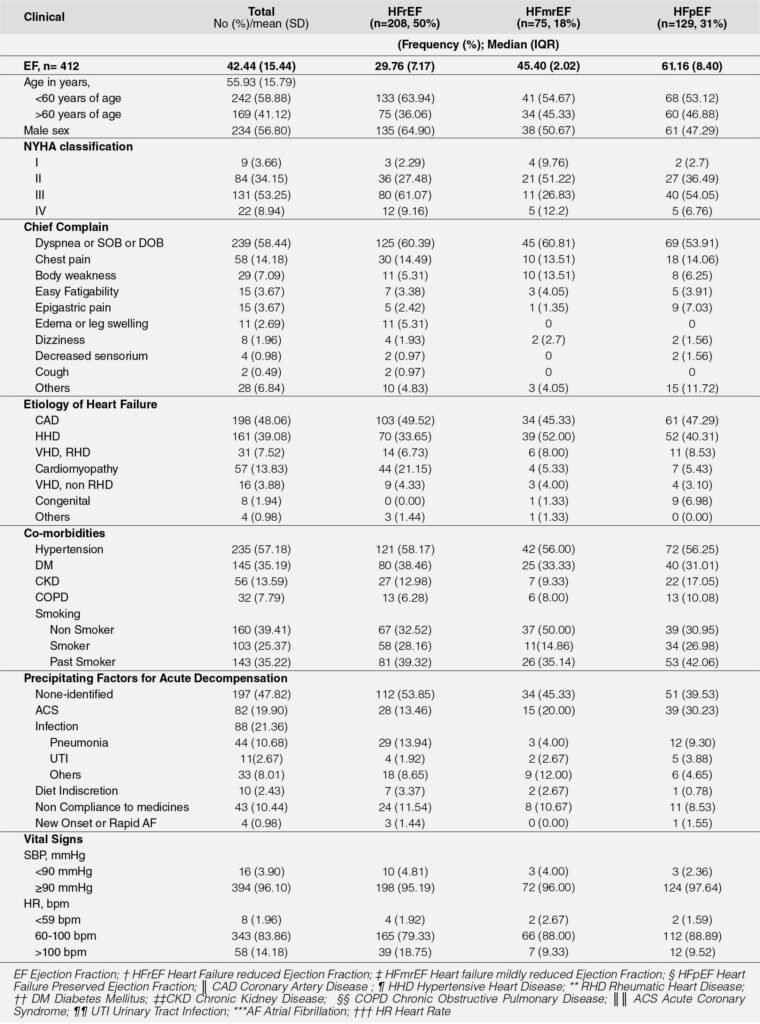
True to all EF categories, the most common symptom was dyspnea or shortness of breath. HFrEF and HFpEF were mostly in New York Heart Association class III.
The most common etiology of heart failure was coronary artery disease (CAD) followed closely by hypertensive heart disease (HHD). There were higher frequency for CAD, diabetes mellitus, valvular non rheumatic heart disease, cardiomyopathy, hypertension, and pneumonia with HFrEF. On the other hand, HHD and being past smoker were mostly noted in HFmrEF.
Hypertension and diabetes were the common co-morbidities to all EF categories but with slightly higher occurrences for HFrEF.
The most common precipitating factor for acute decompensations could not be determined for all EF categories. Majority of patients had >90 mmHg SBP on admission. There were equal occurrences of <90 mmHg SBP in HFrEF and HFmrEF. Tachycardia was mostly noted in HFrEF group.
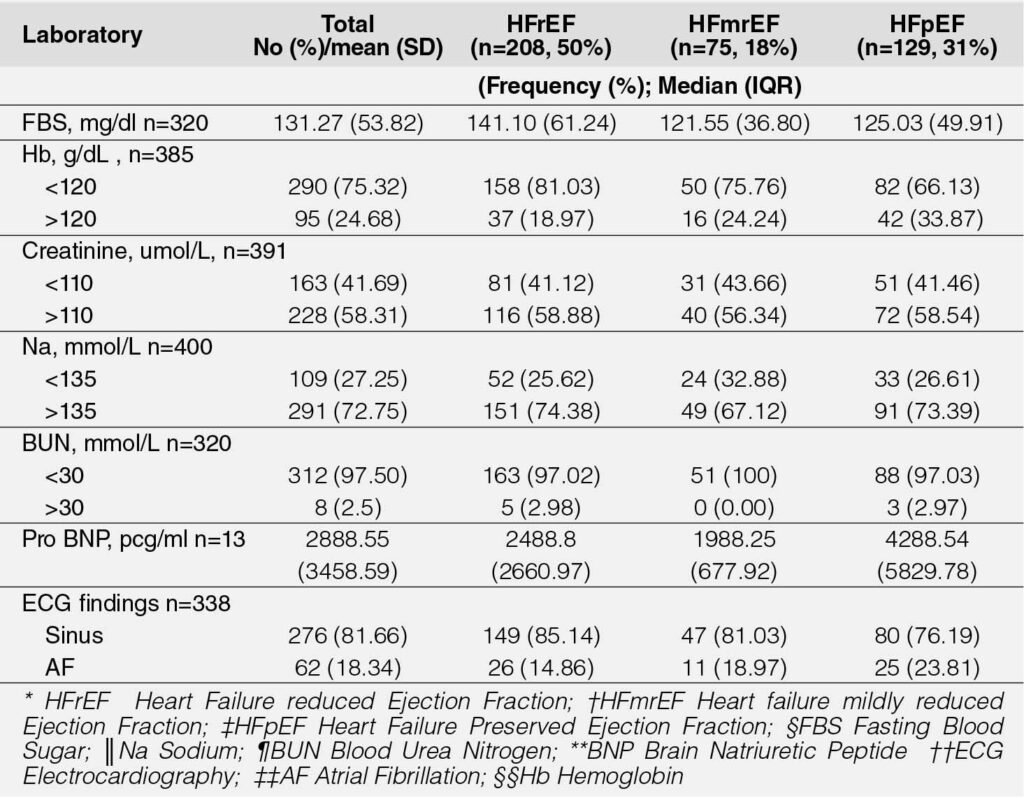
For Laboratory Profile on Admission of Heart Failure Categorized by EF
(Table 2).
Fasting blood sugar had a higher mean (141mg/dl) for HFrEF compared to HFpEF (125 mg/dl) and HFmrEF (122 mg/dl). Anemia defined as <120 g/dl was seen more in HFrEF. Additionally a higher creatinine level was seen equally in HFrEF and HFpEF. Hyponatremia (<135 mg/dl) were mostly noted in HFmrEF and HFpEF. BUN of >30 mmol/L was equally noted in HFrEF and HFpEF. Sinus rhythm was the predominant rhythm for all EF categories. Atrial fibrillation occurred in 18% of the total cohorts and noted more in HFpEF (24%).
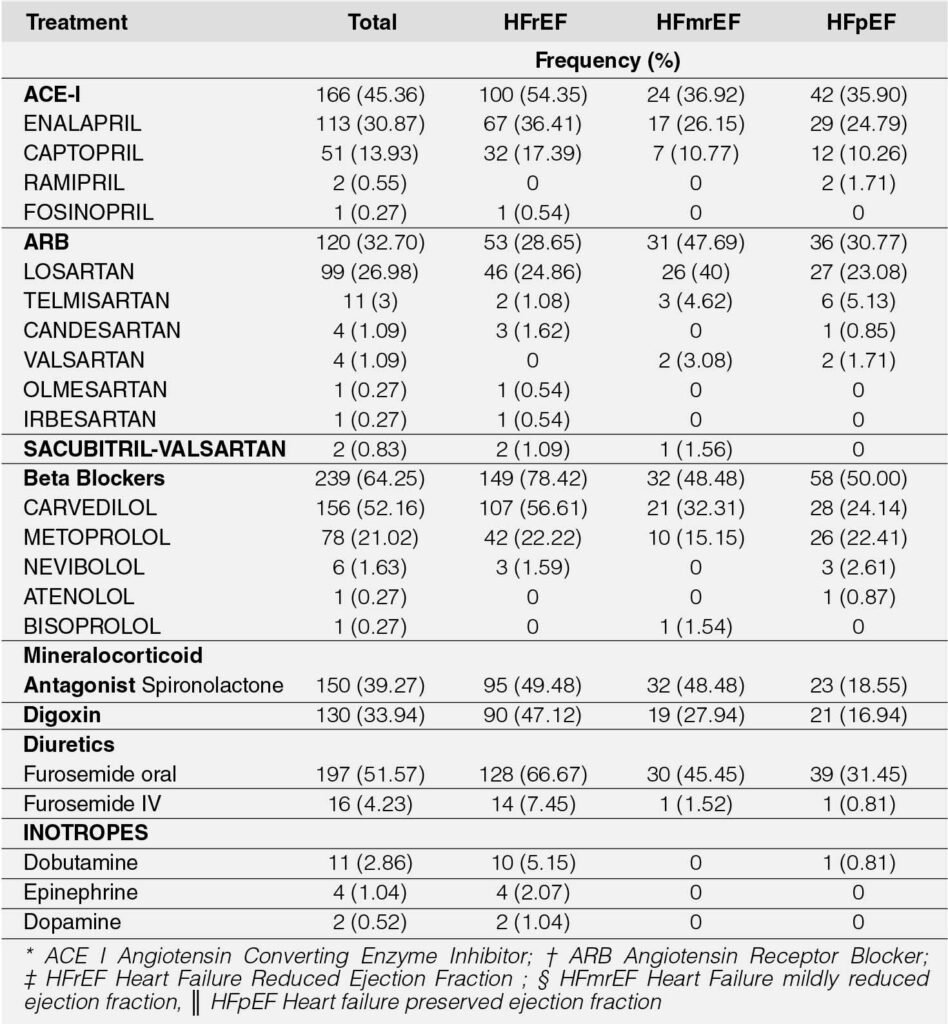
For Drug Treatments of Acute
Decompensated Heart Failure Patients according to Categories of HFrEF, HFmrEF, and HFpEF (Table 3).
Drugs that were given on admission were identified.
Angiotensin Converting Enzyme – Inhibitors (ACE-I), beta blockers, mineralocorticoid antagonists, digoxin, diuretic, and inotropes were mostly given to patients with HFrEF. On the other hand, angiotensin receptor blocker (ARB) was given more to patients with HFmrEF. The most common class of medicines that were administered for ACE-I and ARB were enalapril and losartan respectively. For Beta Blockers, the most common class of drug being administered was carvedilol. Diuretics both intravenous and oral form were preferentially given more to patients with HFrEF. Likewise, inotropes were also substantially administered to patients with HFrEF.
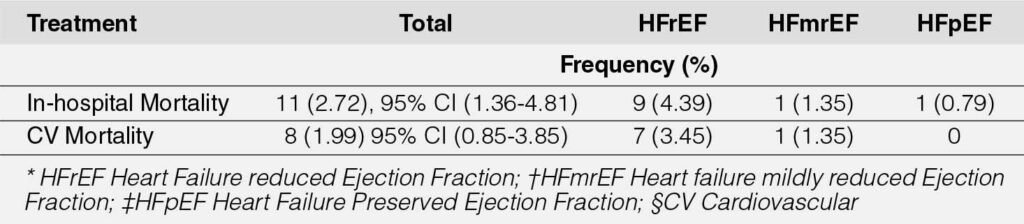
For Outcomes of Heart Failure Categorized by EF (Table 4)
Of these 460, only 405 had information on in hospital mortality. The incidence of in hospital mortality was 2.72% (11/405; 95% CI 1.36-4.81). Of these 11 deaths, 8 patients died due to cardiovascular death. In hospital and Cardiovascular mortality occurred at higher frequency in HFrEF category.
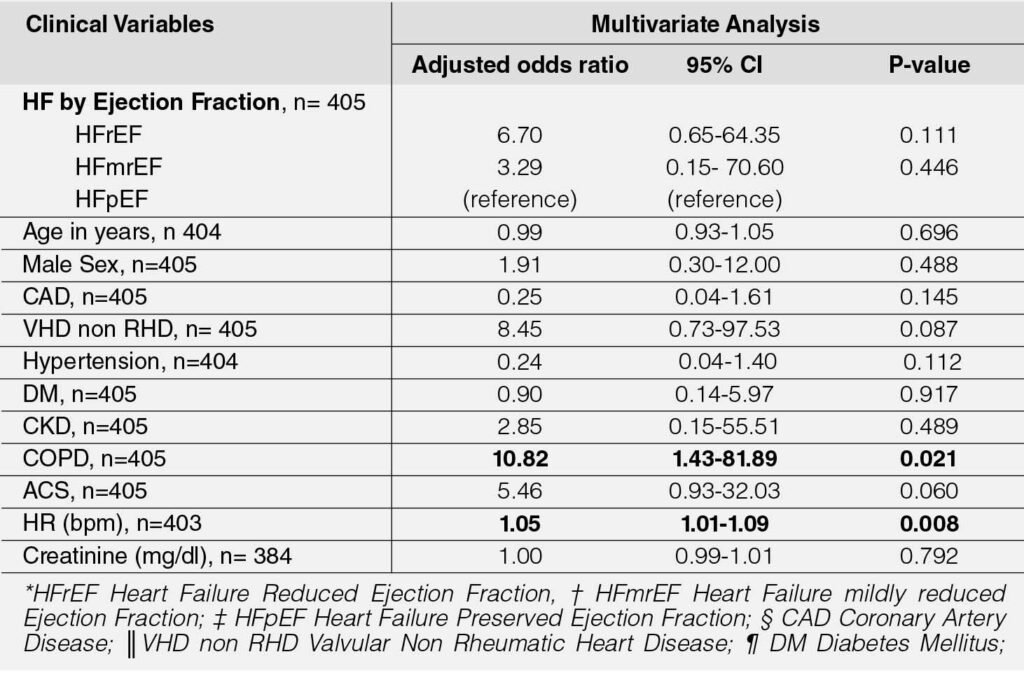
Adjusted Analysis of the Association of Heart Failure Categorized by EF with In-Hospital Mortality among Patients with Acute Decompensated Heart Failure (Table 5).
Using binary logistic regression, baseline demographics and variables that showed significant results in crude analysis were first fitted into the model. Subsequently, variables that deemed clinically important in heart failure were also added into the model.
On adjusted analysis, the odds of dying for HFrEF and HFmrEF was 7x and 3x respectively the odds of dying in HFpEF. However, this result was not statistically significant (HFrEF and HFmrEF p-value 0.111 and 0.446 respectively with HFpEF as reference). The clinical variable that showed statistically significant association with mortality was COPD (adjusted OR 10.82, 95% CI 1.43-81.89). Heart rate also conferred a higher odds to mortality, for every beat/min increase of heart rate, the odds increase by 5% at 95% CI of 1.01-1.09.
DISCUSSION
Acute heart failure (AHF) is defined as rapid onset of new or worsening signs and symptoms of HF. The types of AHF includes de-novo AHF when there is a sudden increase in intracardiac filling pressures most commonly due to cardiac ischemia. Acute decompensated heart failure (ADHF) is another type of AHF where patients had either history of previous cardiac abnormality or signs and symptoms of heart failure (HF).18 ADHF has higher prevalence for co-morbidities such as hypertension, diabetes, chronic obstructive pulmonary disease, atrial fibrillation, and stroke/transient ischemic attack.19
In this study, patients with ADHF occurred in 41% among 1123 AHF patients enrolled in the Heart Failure registry. This proportion is similar to the Danish registry where ADHF occurred in 48.4%.8
HFrEF was the most common classification of HF (50%) followed by HFpEF at 31% which was consistent with cohorts from Europe and Korean registries.9, 12 Population was predominantly male which was also consistent with past registries.9-12, 20
The patients in this study were much younger with a mean age 56 years as compared to international registries which was older with a mean age range of 74-80 years of age.10-11, 21 A study by Reyes et al on HF data from 9 Asian countries showed that patients from Philippines had a younger mean age of 60 years old while Hong Kong conferred the highest mean age of 76.8.22 This was further corroborated in ASIANHF registry where Philippines has the youngest mean age of 55.8 years. One of the possible reasons for younger population with heart failure could be the occurrence of co-morbidities or risk factors at an earlier age, predisposing them to developing heart failure.23 As evident in the PRESYON 4 study, the point prevalence of Filipino subjects with hypertension was increasing, from 28% in 2013 to 37% in 2020. Obesity and smoking were also high among subjects with hypertension occurring at 40% and 25% respectively.24 High mean BMI for Filipinos was also mentioned in ASIAN-HF registry with mean BMI of 26.9, a significantly higher BMI than that of Japan’s cohort at 23.0.23
Coronary artery disease (CAD) was found in this study as the most common etiology of heart failure which was consistent with past studies.9-11, 20, 25
The precipitating factor for ADHF could not be identified in majority of patients. This phenomenon could either be the unfolding of the natural history of HF which is usually interspersed with decompensation or stability. In a study done at Olmstead county, 43% patients with diagnosis of HF would eventually be hospitalized four or more times within five years of diagnosis.26
In most literature reviews, NTproBNP value is expectedly higher for HFrEF as compared to other EF phenotypes. However, the reversal of this observation could be noted in some conditions such as elderly population, atrial fibrillation, old age, elevated left ventricular filling pressure, severe diastolic dysfunction, pulmonary hypertension, renal dysfunction, among others. For our population, those in the HFpEF group were older, with higher incidence of chronic kidney disease and COPD, and baseline atrial fibrillation, that could possibly account for a much elevated NTproBNP values in HFpEF as compared to rest of EF classification.
The incidence of in hospital mortality in this study was 2.72% which was lower as compared to the previous 10% mortality rate of DEAR HEART registry, the 1st Philippine HF registry conducted in 2002-2004.27
The cause of death for AHF was mostly due to cardiovascular (CV) causes (8 out of 11 deaths). This event rate was almost similar with study of Shiga et al where CV death occurred in 80% of deaths.11
The higher percentage of administration of ACEI/ARB and beta blockers that were given on admission could possibly be due to less sicker patients on the initial enrollment as reflected by low utilization of IV blockers and inotropes or vasopressor.
For intravenous treatment, furosemide (83%) was mostly given to HFrEF as compared to both HFmrEF and HFpEF. Additionally, those patients who were given inotropic agents such as dopamine and epinephrine died representing again the degree of severity of their HF condition.
Lastly, as noted in international registries, this study showed that HFrEF conferred the highest mortality rate among the three categories of HF.9-12
On adjusted analysis, HFrEF and HFmrEF when compared with HFpEF although not statistically significant showed a trend for higher odds of all-cause mortality. This higher odds for HFmrEF and HFrEF to mortality was also in agreement with the study of Siqi et al but their patients was combined chronic and acute heart failure.17 In the study of Shiga et al, only HFrEF conferred a higher odds for death and not HFmrEF.11
LIMITATIONS OF THE STUDY
One of the limitations in retrospective cohort study was some clinically significant variables or outcome data were incomplete or missing that might reduce the validity of our findings. In our study, from among 460 enrolled patients, in-hospital data were available for 405 (88.0%), while 55 patients (12.0%) had missing outcome data. The observed in-hospital mortality was 2.72%(11/405). The study group performed sensitivity analyses by assuming that all patients with missing outcomes survived (best-case scenario) or died (worst-case scenario). Under these assumptions, the estimated in-hospital mortality ranged from 2.39% to 14.35%. If we do an assumed mortality rates of 5% to 20% on patients with missing outcomes where realistic assumption are more informative than extreme scenario, it yielded overall mortality estimates of 3.04% to 4.78%, suggesting that the primary findings are reasonably robust under clinically plausible assumptions.
The sample size could also be a limitation since if the recruitment has continued, more events could be evaluated.
The generalizability could also be one of the concerns since this registry was conducted in specialized centers. Hence, the results may be different for those patients who are seen in secondary hospitals or those seen in different regions of the country where specialists and state of the art facilities can be deficient.
Even with inherent limitations, the study results suggested a trend for clinically higher adjusted odds for mortality in HFrEF and HFmrE in acute heart failure as compared to HFpEF. Additionally, the results of this study could pave generation of research hypothesis such as initiating an association studies on both De Novo and ADHF with different categories of ejection fraction.
CONCLUSION AND RECOMMENDATIONS
This study showed that acute decompensated heart failure (ADHF) occurred in 41% among acute heart failure patients. HFrEF was the most common classification of HF followed by HFpEF, then HFmrEF. The mean age was 56 years and more than 50% were males. The mean EF was 42.44%. The most common presenting symptom was dyspnea. Coronary artery disease (CAD) was the most common etiology for heart failure. Hypertension was the most common risk factor. The precipitating factor for ADHF could not be identified in majority of patients. Inhospital mortality occurred in 2.72% with cardiovascular mortality as the major cause of death.
The odds of HFrEF and HFmrEF to in-hospital mortality compared with HFpEF were higher, but did not reach statistical significance.
This study has an important implication since it further strengthens the knowledge that in patients with ADHF, the odds of dying increased with reduced ejection fraction and mildly reduced ejection fraction as compared to odds of dying in HFpEF. Although the significance was not established statistically, the adjusted odds ratio estimates for mortality in HFrEF compared to HFpEF was still consistent with the study of Choi et al.12 Possibly, for AHF, an interplay of EF combined with clinical variables are more significant prognosticators for outcome events rather than EF alone.
With these results, this study could also recommend a more aggressive approach to primary prevention since hypertension and CAD were evidently seen as common risk factors for HF development.
Further, these patients should be followed up and evaluated for their status as this strategy could give us more insight into the behavior of patients with ADHF.
REFERENCES
1. GBD Collaborators. 2017 Disease and Injury Incidence and Prevalence Collaborators. Lancet. 2018;392:1789-1858. CrossRef Pubmed
2. Groenewegen A, Rutten FH, Mosterd A, Hoes AW. Epidemiology of Heart Failure. Euro J Heart Fail. 2020; 22:1342-1356. CrossRef Pubmed
3. Lam, CSP. Heart Failure in Southeast Asia. ESC Heart Failure 2015;2:46–9. CrossRef Pubmed
4. Tumanan-Mendoza BA, Mendoza VL, Bermudez-De los Santos AA, et al. Epidemiologic Burden of Hospitalization for Congestive Heart Failure among Adults aged ≥19 years in the Philippines. Heart Asia. 2017;9:76-80. CrossRef Pubmed
5. Ponikowski P, Voors AA, Anker SD, Bueno H, et al. 2016 ESC Guidelines for the Diagnosis and Treatment of Acute and Chronic Heart Failure. Eur Heart J. 2016;37:2129-2200. CrossRef Pubmed
6. Bozkurt B, Coats AJ, Tsutsui H, et al. Universal Definition and Classification of Heart Failure. J Card Fail. 2021;27:387-413. CrossRef Pubmed
7. McDonach TA, Metra M, Adamo M, et al. 2021 ESC Guidelines for the Diagnosis and Treatment of Acute and Chronic Heart Failure. European Heart Journal. 2021;42:3599-3726. CrossRef Pubmed
8. Butt J, Fosbøl E, Gerds T, et al. Readmission and Death in Patients Admitted with New-onset versus Worsening of Chronic Heart Failure. Euro J Heart Fail. 2020:22;1777-1785. CrossRef Pubmed
9. Kaplon-Cieslicka A, Benson L, Chioncel O, et al. A Comprehensive Characterization of Acute Heart Failure with Preserved versus Mildly Reduced versus Reduced Ejection Fraction –ESC-HFA EORP Registry. Euro J Heart Fail. 2022 doi:10.1002/ejhf.2408. CrossRef Pubmed
10. Yaku H, Ozasa N, Morimoto T, et al. Demographics, Management, and In-Hospital Outcome of Hospitalized Acute Heart Failure Syndrome Patients in Contemporary Real Clinical Practice in Japan –KCHF Registry. Circ J. 2018;82:2811-2819. CrossRef Pubmed
11. Shiga T, Suzuki A, Haruta S, et al. Clinical characteristics of Hospitalized Heart Failure Patients with Preserved, Mid-range, and Reduced Ejection Fractions in Japan. ESC Heart Failure. 2019; 6: 475-486. CrossRef Pubmed
12. Choi KH, Lee GY, Choi JO, et al. Outcomes of De novo and Acute Decompensated Heart Failure Patients According to Ejection Fraction. Heart. 2018;104:525-532. CrossRef Pubmed
13. Cho JH, Choe WS, Lee, HY, et al. Comparison of Characteristics and 3-Year Outcomes in Patients With Acute Heart Failure With Preserved, Mid-Range, and Reduced Ejection Fraction. Circ J. 2019;83:347-356. CrossRef Pubmed
14. Atherton JJ, et al. Patient Characteristics from a Regional Multicenter of Acute Decompensated Heart Failure in Asia Pacific (ADHERE). J Card Fail. 2012;18:82-8. CrossRef Pubmed
15. West R, et al. Characterization of Heart Failure Patients with Preserved Ejection Fraction: a comparison between ADHERE-US registry and ADHERE- International registry. Euro J Heart Fail. 2011;13:945-952. CrossRef Pubmed
16. Lam CSP, Gamble GD, Ling LH, et al. Mortality Associated with Heart Failure with Preserved vs. Reduced Ejection Fraction in a Prospective International Multi-ethnic Cohort Study. Eur Heart J. 2018;39:1770-1780. CrossRef Pubmed
17. Siqi L, Litian Y , Huiqiong T, et al. Clinical Characteristics and Prognosis of Heart Failure with mid-range Ejection Fraction. BMC Cardiovascular Disorders. 2019;19:209. CrossRef Pubmed
18. Kurmani S, Squire I. Acute Heart Failure: Definition, Classification and Epidemiology. Curr Heart Fail Rep. 2017;14:385-392. CrossRef Pubmed
19. Pranata R, Tondas AE, Yonas E, et al. Differences in Clinical Characteristics and Outcome of De novo Heart Failure Compared to Acutely Decompensated Chronic Heart Failure. Acta Cardiol. 2021;76:410-420. CrossRef Pubmed
20. Shah KS, Xu H, Matsouaka RA. Heart Failure With Preserved, Borderline, and Reduced Ejection Fraction 5-Year Outcomes. J Am Coll Cardiol. 2017;70:2476-86. CrossRef Pubmed
21. Yamamoto E, Kato T, Yaku H, et al. Sex differences in patients with acute decompensated heart failure in Japan: KCHF registry. ESC Heart Failure. 2020;7:2485-2493. CrossRef Pubmed
22. Reyes EB, Won HJ, Firdaus I, et al. Heart failure across Asia. Int J Cardiol. 2016;223:163-167. CrossRef Pubmed
23. Michael R. MacDonald MR, Ting Tay W, Teng TH. Regional Variation of Mortality in Heart Failure With Reduced and Preserved Ejection Fraction Across Asia: ASIAN-HF Registry. J Am Heart Assoc. 2020;9:1-15. CrossRef Pubmed
24. Sison JA, Cawed-Mende RM, Oliva RV. Prevalence, Awareness, and Treatment Profile of Adult Filipino Hypertensive Individuals: PRESYON-4. Phil J Cardiol. July-December 2021, 53-68. CrossRef
25. Choi KH, Lee GY, Choi JO, et al. Outcomes of De novo and Acute Decompensated Heart Failure Patients According to Ejection Fraction. Heart. 2018;104:525-532. CrossRef Pubmed
26. Dunlay SM, Redfield MM, Weston SA, et al. Hospitalizations after Heart Failure Diagnosis a Community Perspective. J Am Coll Cardiol. 2009;54:1695-1702. CrossRef Pubmed
27. Jorge, J, Encarnacion D, Lacson S, et al . The D.E.A.R. Heart Programme. Philipp J Cardiol. 2007; 35; 33-43.
Copyright Information